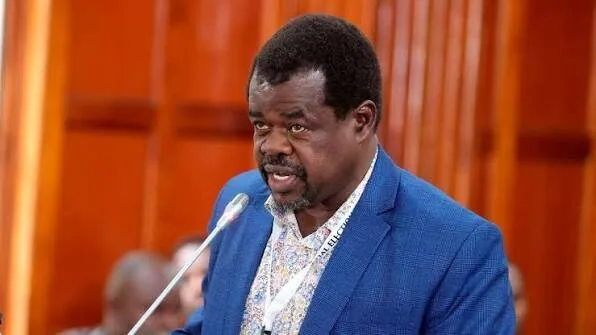
Busia Senator Okiya Omtatah has questioned oversight of government borrowing.
Busia Senator Okiya Omtatah questions lending arrangements and urges closer parliamentary scrutiny of government loans and public spending.
Kenya borrowing scrutiny has drawn fresh attention after Busia Senator Okiya Omtatah challenged the World Bank’s corruption assessment. He accused the lender of overlooking borrowing arrangements that he claims weaken Parliament’s control over public funds.
In a statement, Omtatah argued that procurement irregularities represent only part of Kenya’s public finance problems. He also alleged that some government loans lack corresponding expenditure provisions in Parliament’s annual Appropriations Acts.
The senator accused the World Bank of avoiding scrutiny of its own lending arrangements by emphasising procurement. In his view, questionable borrowing creates opportunities to access and spend public resources outside ordinary budget controls.

Kenya borrowing scrutiny centres on legal safeguards
Omtatah questioned Sections 3, 4 and 5 of the Bretton Woods Agreements Act. He argued that these provisions allow the Treasury and World Bank to bypass important accountability procedures.
Specifically, Section 4 charges certain payments to the International Monetary Fund and World Bank on the Consolidated Fund without further appropriation. The legislation also allows financial obligations and borrowing to meet specified payments.
He further questioned the World Bank’s legal immunities under Article VII of its Articles of Agreement. Omtatah argued that these protections, alongside domestic legislation, complicate efforts to hold the lender accountable.
Meanwhile, he challenged the Treasury Cabinet Secretary’s borrowing discretion under Section 49 of the Public Finance Management Act. He said Parliament’s approval of the Budget Policy Statement should not replace legislative approval of borrowing.
To support his argument, Omtatah urged Kenyans to compare Appropriations Acts with the Treasury’s monthly revenue and expenditure statements. He claimed discrepancies would reveal loans without links to projects approved by Parliament.
Offshore funds and governance concerns
Omtatah also alleged that some budgeted foreign loan proceeds remain in offshore accounts and finance spending outside Kenya. He argued that this limits scrutiny by Parliament and the Controller of Budget.
He challenged Section 50(7) of the Public Finance Management Act, arguing that it conflicts with Article 206 of the Constitution. That article establishes the Consolidated Fund and requires the Controller of Budget to approve withdrawals.
Separately, the senator criticised securitisation arrangements involving future tax revenues. He warned that funds with executive-appointed boards risk functioning as parallel treasuries outside normal borrowing and spending controls.
His intervention followed the World Bank’s 34th Kenya Economic Update, released on November 4. The lender estimated that corruption and collusion affecting spending and revenue collection cost Kenya up to two percentage points of GDP annually through higher fiscal deficits.
The assessment also linked governance weaknesses to greater borrowing needs and fewer resources for essential services. At its launch, Treasury Principal Secretary Chris Kiptoo highlighted conflict-of-interest legislation, procurement digitisation and efforts to create predictable contractor payment timelines.