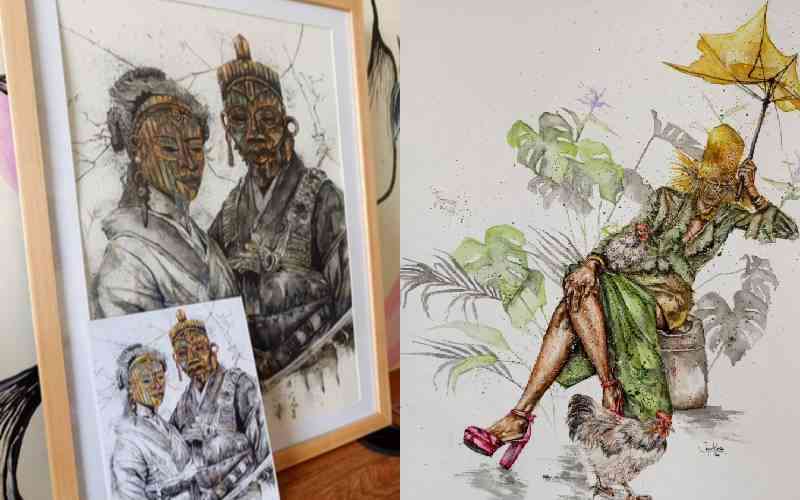
Joyce Kuria’s artistic practice connects African cultural references with imagined technological futures.
The Nairobi-based artist draws on Kenyan culture and science fiction, while prints and merchandise bring her illustrations to wider audiences.
Nairobi-based visual artist Joyce Kuria combines African heritage with modern technology to explore identity and cultural change. Through ink illustrations and acrylic paintings, she brings Kenyan cultural references into imagined worlds shaped by science fiction.
Her subjects include cyborgs and figures that cross the boundary between human and machine. Meanwhile, nostalgia and retro-futurism connect familiar imagery from the past with visions of what lies ahead.
The work preserves cultural references while exploring how African identity might evolve in a technologically changing world.

Joyce Kuria connects culture and imagined worlds
Kuria studied Fine Art at Kenyatta University and has worked as a freelance visual artist and graphic designer since 2017. Her practice centres on ink illustration and acrylic painting, but she also combines watercolour with pen and ink.
Colour, gesture and texture help define her illustrations, while detailed compositions bring these different materials together. Science fiction also shapes her paintings, with cyborg figures among the subjects she explores.
That meeting of different worlds extends to her collaboration with fellow artist Daisy Buyanzi under the name Wet Paint. Some of their work places traditional male figures alongside contemporary technological imagery, including computer motherboards.
By bringing those elements together, the artists connect African cultural imagery with the technology of contemporary life. The pairing also reflects Kuria’s broader interest in heritage and imagined futures.
Making art accessible through prints and merchandise
Alongside original paintings, Kuria produces prints that give audiences another way to own her work. She also offers smaller products, including stickers, fridge magnets, bookmarks and pins.
These items create an entry point for people who enjoy her illustrations but cannot invest in an original. They also take her work beyond galleries and collectors’ homes.
An original carries the artist’s individual marks, material choices and decisions, making each piece unique. Prints, by contrast, reproduce an existing artwork in multiple copies, usually on paper or canvas.
Open-edition prints allow unrestricted production, while limited editions restrict copies to a set number. Artists may also sign and number limited editions, adding to their appeal for collectors.
For Kuria, prints and smaller products extend access to the same creative world explored in her paintings.