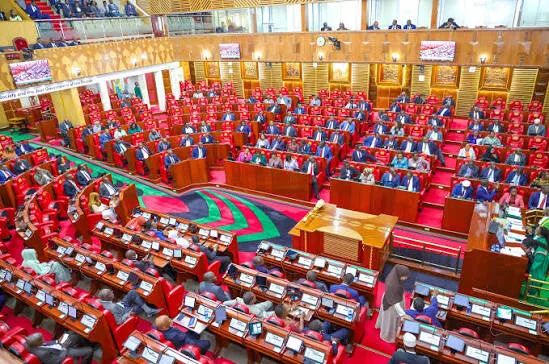
The National Assembly has approved amendments setting voter support requirements for recalling elected representatives.
MPs backed ward-level support requirements for recalls and a simple majority for subsequent by-elections, sending the amended Bill back to the Senate.
The National Assembly has approved an MP recall threshold requiring support from one-third of registered voters in every constituency ward. The amended Elections Amendment (No. 2) Bill now returns to the Senate for consideration.
For senators, the requirement covers one-third of registered voters in every constituency within the affected county. Meanwhile, a simple majority of participating voters would determine the winner of a subsequent recall by-election.
The provisions form part of Senate Bill No. 29 of 2024. However, they remain subject to the legislative process and do not yet constitute a final recall framework.

MP recall threshold revised after debate
MPs approved the changes after returning Clause 26A to the Committee of the Whole House for further consideration. Kimani Kuria initially proposed support from half of registered voters in each relevant ward or constituency.
However, Minority Leader Junet Mohamed opposed that requirement and backed the Justice and Legal Affairs Committee’s one-third proposal. He warned that repeating provisions courts had rejected could expose the legislation to fresh legal challenges.
Majority Leader Kimani Ichung’wah also opposed the 50 per cent requirement. He argued that many MPs win elections without support from half of registered voters in every ward.
West Mugirango MP Stephen Mogaka then proposed restoring the one-third requirement, and the House adopted his amendment. Kuria subsequently supported the revised provision.
Kuria also explained that the clause addressed two separate stages. The one-third requirement would govern the recall process, while a simple majority would decide the resulting by-election.
MPs seek safeguards against repeated contests
Earlier, Homa Bay Town MP Peter Kaluma requested reconsideration of Clause 26A to clarify the required support. Without a clear threshold, he warned, recall petitions could trigger repeated elections and political disputes.
Millie Odhiambo reluctantly supported reconsideration but cautioned against allowing populism to shape legislative decisions. She also urged MPs to listen carefully to one another during debate.
Meanwhile, Farah Maalim raised concerns about recall proceedings beginning shortly after representatives take office. He warned that the absence of a minimum waiting period could encourage political activism and unnecessary litigation.
Senate consideration and mediation ahead
The Senate will now consider the National Assembly’s amendments. Mediation will also be necessary to reconcile differences between the Houses and secure concurrence.
Kaluma said that process would offer an opportunity to refine the framework while balancing voter rights and safeguards.
The legislation seeks to implement Article 104 of the Constitution, which gives voters the right to recall elected representatives. However, earlier statutory provisions encountered constitutional challenges.
In 2017, the High Court struck down sections 45 to 48 of the Elections Act. Its findings included discriminatory restrictions on who could initiate petitions and defects in recall procedures.