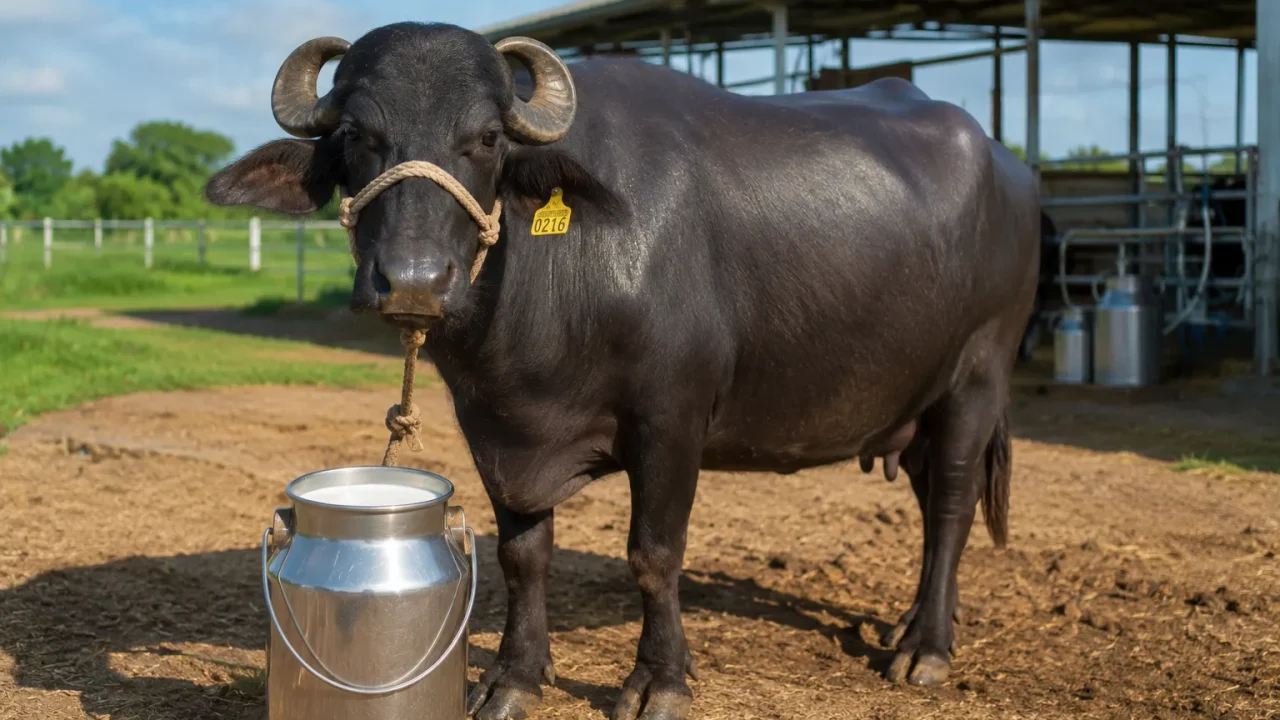
Kenya’s plan to introduce Murrah buffaloes has sparked debate over whether the animals could help boost milk production. The initiative attracted attention after President William Ruto highlighted buffalo farming as a potential way to strengthen the country’s dairy sector.

However, Livestock Development Principal Secretary Jonathan Mueke clarified that the government is considering the domesticated Murrah breed from India. The animals are different from the African buffaloes commonly associated with Kenya’s wildlife reserves.
The proposed initiative could open new opportunities for dairy farmers. However, its success will depend on research, proper management and the breed’s ability to adapt to local conditions.
Meet the Murrah Buffalo
The Murrah is a domesticated water buffalo breed originating from India. Farmers widely rear the breed for milk production because of its rich milk composition.
Unlike the African buffalo, the Murrah is a livestock animal bred for agricultural purposes. Therefore, its introduction would fall under livestock development rather than wildlife management.
The distinction became important after Kenyans reacted to the announcement with jokes and concerns about handling buffaloes on ordinary farms.
Why Murrah Milk Could Benefit Farmers
One major advantage of Murrah buffalo milk is its high butterfat content. Compared with typical cow’s milk, buffalo milk generally contains more fat and total solids.
This composition makes it valuable for producing butter, ghee, cheese and yoghurt. Dairy processors could therefore explore new products targeting consumers seeking richer dairy options.
For farmers, the breed could offer an opportunity to diversify production and supply specialised dairy markets. However, actual profitability would depend on feed costs, milk yields, animal health and market demand.
Claims that Murrah buffaloes produce three times as much milk as ordinary cows should be treated cautiously. Production varies depending on genetics, feeding, management and lactation conditions.
Government Plans Research Before Wider Adoption
The government intends to assess the breed’s suitability before introducing it more widely to Kenyan farms. According to the proposed approach, the initial animals will be kept at government research facilities.
Experts will need to examine feeding requirements, disease risks, reproduction and adaptation to Kenya’s climate. These findings would help determine whether the breed can perform reliably under local farming conditions.
Such research could also establish the costs farmers would face when raising Murrah buffaloes. This information would be essential before recommending large-scale adoption.
Could Murrah Buffaloes Strengthen Kenya’s Dairy Sector?
Kenya’s dairy industry depends heavily on cattle, particularly among smallholder farmers. Introducing another milk-producing livestock breed could create opportunities for diversification and specialised dairy processing.
The initiative also points to potential agricultural cooperation between Kenya and India. However, sourcing suitable animals and establishing import arrangements would require careful attention to veterinary and biosecurity standards.
Ultimately, Murrah buffalo farming could offer Kenya another route towards strengthening dairy production. Its long-term success will depend on scientific evidence, sustainable farming practices and whether farmers can achieve competitive returns.