Ruto and Putin agreed in Moscow to end the recruitment of Kenyans into Russia’s military.
The leaders agreed to stop enlistment, while Kenya’s defence attaché will coordinate affected citizens’ return and compensation.
President William Ruto and Russian President Vladimir Putin have agreed to end Russian military recruitment of Kenyans. The two leaders reached the agreement during talks at the Kremlin in Moscow on Thursday.
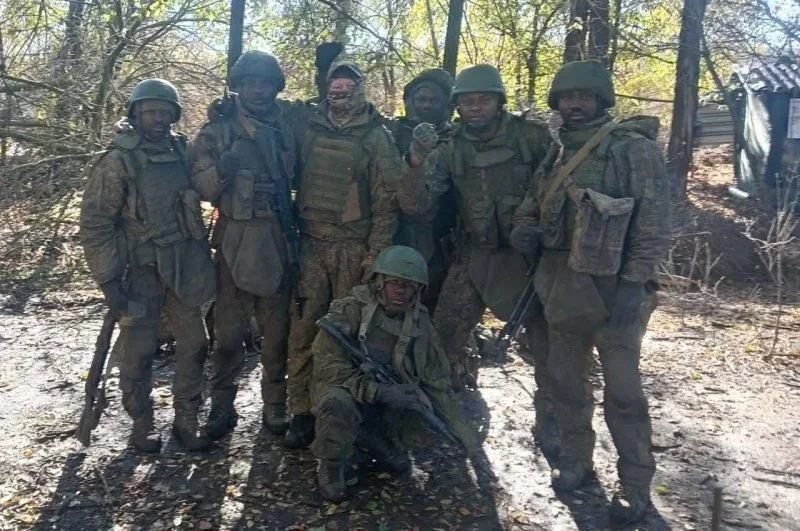
They agreed to designate Kenya as a non-source country for enlistment into Russia’s armed forces. The move closes recruitment channels through which several Kenyans had illegally joined the military to fight in the Russia-Ukraine war.
The bilateral meeting followed the Third Russia-Africa Economic and Humanitarian Forum. Alongside recruitment concerns, the leaders discussed trade, investment, education and diplomatic cooperation.

Russian military recruitment agreement and return plans
Ruto said he had appointed a defence attaché at Kenya’s embassy in Moscow to help coordinate repatriation. The official will work with Russia’s Defence Ministry to return Kenyans who travelled there for military purposes.
The attaché will also work with the ministry to facilitate compensation for affected Kenyans and their safe return home.
Meanwhile, the leaders backed closer economic ties, drawing on the countries’ longstanding diplomatic relationship. Ruto recalled that Russia was the second country to recognise Kenya’s independence in 1963.
However, he acknowledged that trade currently favours Russia and called for more opportunities for Kenyan exports. He singled out tea and flowers as products Kenya could sell more widely in the Russian market.
Ruto also invited Russian investors to consider opportunities under Kenya’s National Infrastructure Fund. He described the initiative as offering commercially viable projects for private investment in infrastructure.
Scholarships and five cooperation agreements
For his part, Putin pledged to strengthen economic, cultural and humanitarian cooperation with Kenya. He also highlighted Russia’s role as a leading fertiliser supplier and sought to expand trade.
On education, Putin announced an increase in annual Russian government scholarships for Kenyan students, from 70 to 300. He further expressed support for strengthening the United Nations Environment Programme headquarters in Nairobi.
The visit also concluded with five memorandums of understanding covering economic cooperation, employment, transport and diplomacy. One establishes an intergovernmental Russia-Kenya commission to strengthen economic ties.
Another links Russia’s Federal Service for Labour and Employment with Kenya’s Labour Ministry on labour inspection and employment promotion. It is expected to create more job opportunities for Kenyans in Russia once implementation mechanisms are ready.
The remaining agreements cover transport cooperation, visa-free travel for diplomatic and service passport holders, and diplomatic training. Ruto said the agreements would open new opportunities for trade and investment.