


The 15th UN Crime Congress in Abu Dhabi focuses on international cooperation against organised crime.
Monica Juma says criminal networks are combining offences and exploiting technology as delegates from more than 110 countries gather in Abu Dhabi.
Rapid technological advances are helping organised criminal networks operate faster and extend their activities across national borders, the United Nations Office on Drugs and Crime (UNODC) has warned.
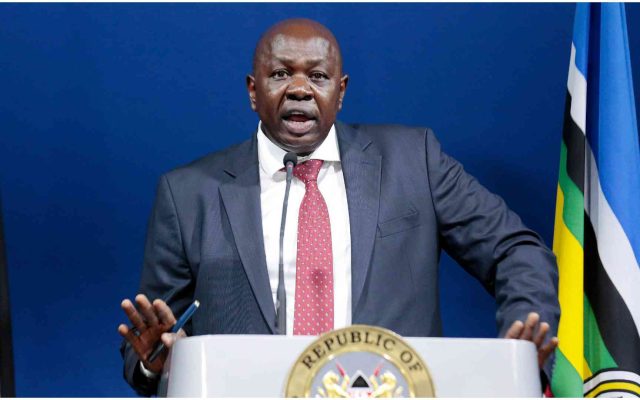
UNODC Executive Director Monica Juma said criminal groups were using technology to combine different forms of crime, widen their reach and increase their profits. She raised the concern as the 15th UN Crime Congress opened in Abu Dhabi.
Juma, who also serves as Director-General of the United Nations Office at Vienna, said the changes were affecting the nature, scale and speed of crime in communities, countries and regions worldwide.
Technology connects criminal activities
Juma described a growing convergence of crime types, with criminal networks adopting technology to carry out offences at speed and reach people in widely separated locations.
In UNODC’s assessment, these overlapping activities create more complex threats. Technology allows criminal operations to target millions of people while linking networks that profit from offences across borders and regions.
Her warning highlighted two connected challenges: the speed at which offences can be committed and the geographical reach of those responsible. Criminal activity stretching across several jurisdictions requires cooperation beyond the authorities of any single country, she said.
Juma made the remarks while reflecting on raising the UN flag to formally launch the congress, placing technological change at the centre of the gathering’s discussions on organised crime.
Delegates seek coordinated responses
The six-day congress brings together governments, industry representatives, civil society, philanthropy and other stakeholders from more than 110 countries.
Its agenda centres on strengthening international cooperation against transnational organised crime, alongside efforts to protect the rule of law and improve access to justice.
Juma said participants shared the task of dismantling global criminal networks and ensuring that communities could obtain justice. She emphasised the need for countries to work together as criminal operations increasingly extend beyond national boundaries.
The gathering provides a forum for participants to examine emerging threats and discuss coordinated responses. Those discussions bring government representatives together with stakeholders from outside the public sector around the congress’s shared objectives.
Turning earlier commitments into action
The Abu Dhabi meeting builds on commitments reached at the previous UN Crime Congress in Kyoto, Japan. The UN’s stated aim is to turn those commitments into practical measures with measurable results on the ground.
Juma said the focus should be on moving from international pledges to implementation, rather than treating the congress as an endpoint.
She also said UNODC would remain involved after the Abu Dhabi gathering to support that work. Her message linked the immediate discussions on technology-enabled crime with the longer-term task of putting coordinated international responses into practice.