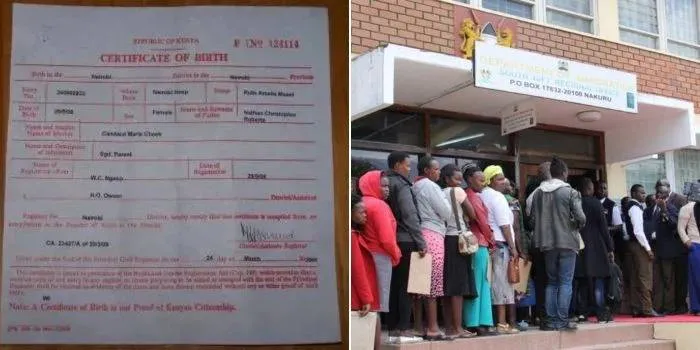
The Interior Ministry says the birth certificate application fee remains Ksh200.
The Interior Ministry has rejected calls to restore the Ksh50 charge, citing inflation, regional rates and higher material costs.
The Ministry of Interior and National Administration has ruled out reducing birth certificate fees from Ksh200 to Ksh50. The decision comes amid public calls for lower charges and concerns from members of parliament.
Gabriel Tongoyo, chairperson of the National Assembly’s Administration and Internal Security Committee, read the ministry’s statement in Parliament. In it, Immigration Principal Secretary Belio Kipsang defended the current charges and ruled out restoring the previous rates.
Why birth certificate fees remain unchanged
Kipsang said the government last reviewed the former Ksh50 application fee in 1998. He argued that inflation since then justified the increase to Ksh200.

In his explanation, the current charge broadly matches the value of the earlier fee when adjusted for inflation. The ministry therefore maintains that the revision reflects changes in monetary value rather than an unjustified increase.
Kipsang also pointed to fees elsewhere in the region to support Kenya’s rate. The ministry put the equivalent birth certificate charge at Ksh320 in Tanzania and Ksh180 in Uganda.
For comparison, it cited replacement charges ranging from Ksh1,100 to Ksh1,600 in Zambia. Kipsang said Kenya’s revised fees generally align with charges for similar services across Africa and abroad.
Higher charges also apply to other services
The government increased the birth certificate application fee from Ksh50 to Ksh200 in November 2024. That change added Ksh150 to the cost of applying for the document.
The review also raised late birth registration charges from Ksh350 to Ksh500. Meanwhile, replacing a lost birth certificate now costs Ksh1,000, compared with the previous Ksh90.
Applicants seeking amendments to a birth certificate also pay Ksh1,000, up from Ksh130. These changes formed part of the wider revision affecting birth registration services.
Beyond inflation and regional comparisons, Kipsang cited the cost of improving document security. He said the need for more secure documents had driven improvements in material quality, which also increased costs.
Despite calls to return to the earlier charges, the ministry maintains that the revised rates remain in force.