Rigathi Gachagua has urged opposition leaders to prioritise voter mobilisation.
The former deputy president says grassroots support, not press conferences or manifestos, will determine the opposition’s chances against William Ruto.
Former Deputy President Rigathi Gachagua has rejected bullying claims from United Opposition colleagues, urging them to concentrate on mobilising voters. He said defeating President William Ruto would require a strong electoral base rather than political declarations.
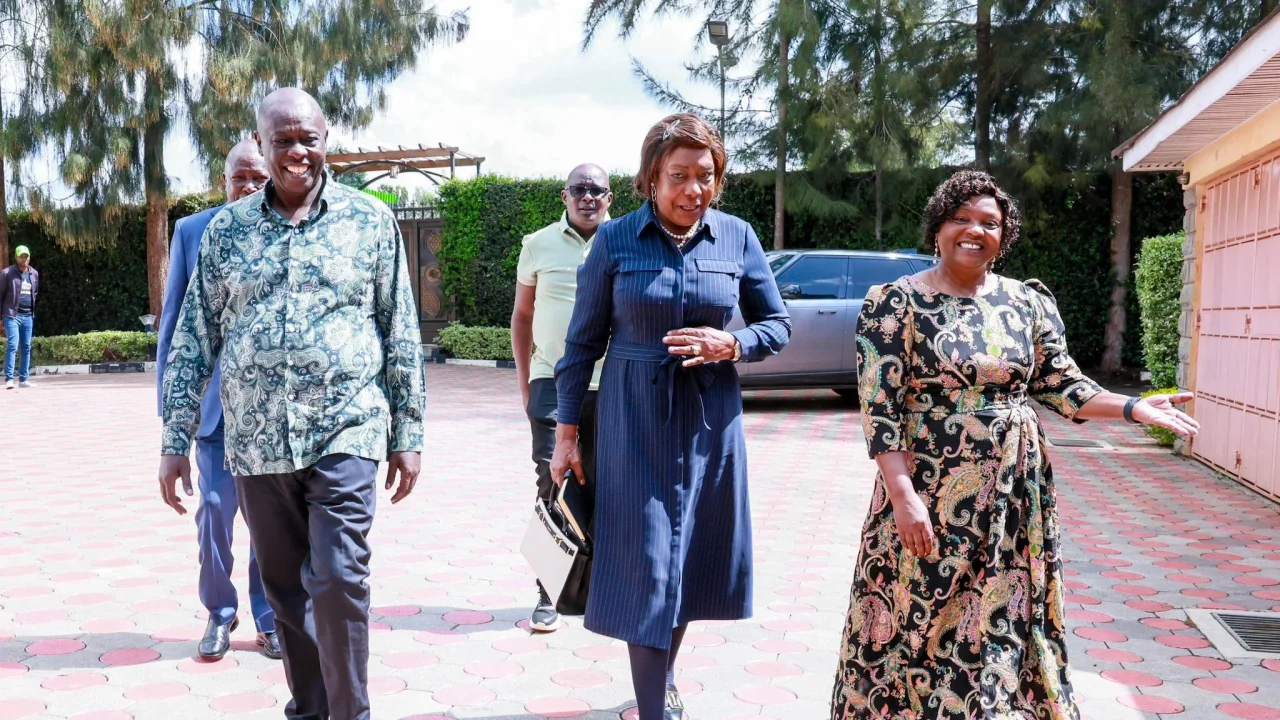
Gachagua spoke at his Wamunyoro residence in Nyeri while welcoming former Kenyan High Commissioner to India Peter Munyiri into his party.
Gachagua answers bullying claims
Some United Opposition leaders have accused Gachagua of arrogance and bullying, arguing that his approach could weaken opposition unity. However, he defended his efforts as necessary work to build the numbers required for an election victory.

He urged colleagues criticising him to leave their homes and seek votes instead. Gachagua also argued that television appearances and press conferences could not replace direct efforts to win voter support.
In his view, even strong political ideas and manifestos would fall short without enough votes. He pointed to Ruto’s own mobilisation efforts, including in the President’s political backyard, as evidence of the importance of electoral numbers.
Voter support before candidate selection
Meanwhile, Gachagua said the opposition should consolidate its support before choosing a candidate to lead its presidential campaign. That process, he argued, should include securing firm backing in one region before settling the leadership question.
He also criticised leaders he considered weak at grassroots mobilisation, saying he would not yield to such figures. His argument centred on the need for leaders to demonstrate their ability to attract voters beyond media appearances.
However, Gachagua reiterated that he would support whoever the opposition ultimately selects to challenge Ruto. He maintained his determination to limit the President to one term, while urging colleagues to prioritise building the electoral support needed to achieve that goal.