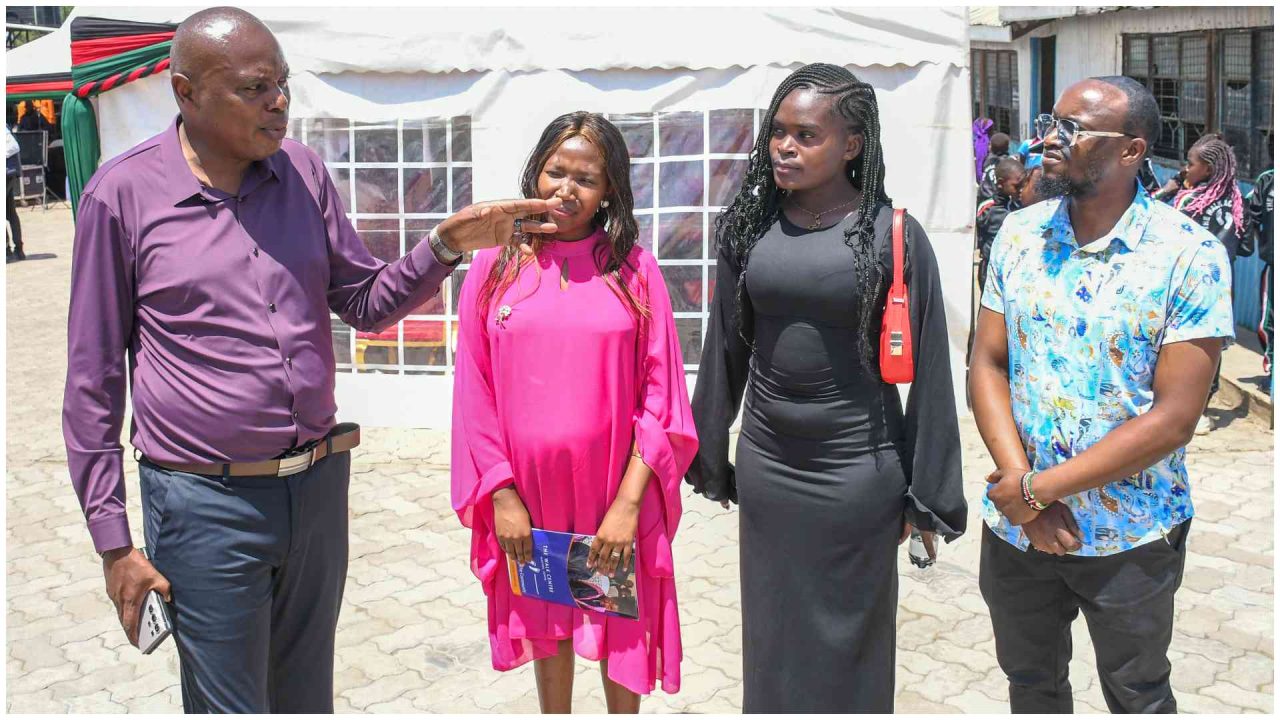
Pastor Alex Maina, Lilian Diki, Maureen Nashikanda and John Maina share a conversation at The Walk Centre in Nakuru.
Pastor Alex Maina’s initiative has helped children from Nakuru’s dumpsite pursue education, build careers and support others.
For Gioto children growing up around Nakuru’s dumpsite, The Walk Centre has offered a route towards education and careers. Pastor Alex Maina says more than 1,000 children have passed through the programme he began after meeting scavenging families.
Among them are an author, a music entrepreneur and a university student preparing for a teaching career. Their accounts trace the support that helped them move beyond childhood poverty.
How support for Gioto children began
Maina first visited the dumpsite in 2001, where he found families searching through waste for food and saleable items. Although he had few resources, he began returning weekly with bread and juice.

In 2005, he rented a small space in London estate, a few kilometres from Gioto. Children could spend mornings there singing and joining activities instead of staying at the dumpsite.
The initiative later developed into a school. Forty-five children arrived on its first day, while the introduction of meals increased attendance to 75.
Maina says his concern extended beyond children missing lessons. He wanted to interrupt a pattern in which poverty kept successive generations dependent on scavenging.
For that reason, he saw education and practical skills as ways to show children different possibilities. However, he says school attendance alone cannot address every difficulty facing their families.
From scavenging to college and business
John Maina grew up around Gioto in makeshift shelters built from cardboard and discarded materials. He recalls searching the rubbish for food, including leftover ugali that his family cleaned before eating.
At the time, he says, life beyond the dumpsite felt impossible to imagine. Even a question about his future left him unsure what the word meant.
John joined The Walk in 2013 and later attended Crater View Secondary School. He then studied Community Health and Community Development at African Institute College.
Maina continued supporting him after school, and John eventually started a music recording business.
Meanwhile, Maureen Nashikanda joined The Walk Centre aged three after growing up near Gioto. She now studies Education Arts at Laikipia University, specialising in English and literature.
Reflecting on her return to the centre, she recalled receiving lessons and mentorship there two decades earlier. She says she expects to graduate in November and hopes to pursue a master’s degree.
Her longer-term ambition is to become a lecturer. She also wants to support a child at The Walk Centre as a way of giving back.
Lilian Diki turns childhood pain into books
For Lilian Diki, support from Maina and his wife followed a devastating family loss. She was seven when her mother died in a house fire in 2004.
Diki says her mother’s partner set their home ablaze after accusing her of having an affair. Her younger brother was also inside the house.
Afterwards, Diki and her twin sister faced homelessness. She recalls sleeping outside, living on the streets and scavenging for food at the dumpsite.
She also endured cruel remarks about her mother. However, Maina and his wife began providing care, food and school fees for her and other children.
Diki says Maina encouraged her to believe that her mother’s experience did not have to define her life. She completed Form Four before training as a nurse at Kenya Medical Training College.
Later, she received a scholarship to study Business Information Technology at Maseno University. Her twin sister, however, did not finish school.
Diki eventually became an author, drawing on her experiences of poverty, stigma and recovery. Her first book, It Ends with Me, reflects her determination to prevent that hardship from defining another generation.
Her other titles include Leaving the Rags Behind, Becoming the Evidence of God’s Voice and Don’t Waste Your Pain.
Despite these individual gains, Maina acknowledges that families still depend on Gioto’s waste for survival. He also credits other schools that work with the community to support children.
Twenty-five years after his first visit, he does not claim to have ended the problem. Instead, he points to former pupils whose lives now hold possibilities beyond the dumpsite.