


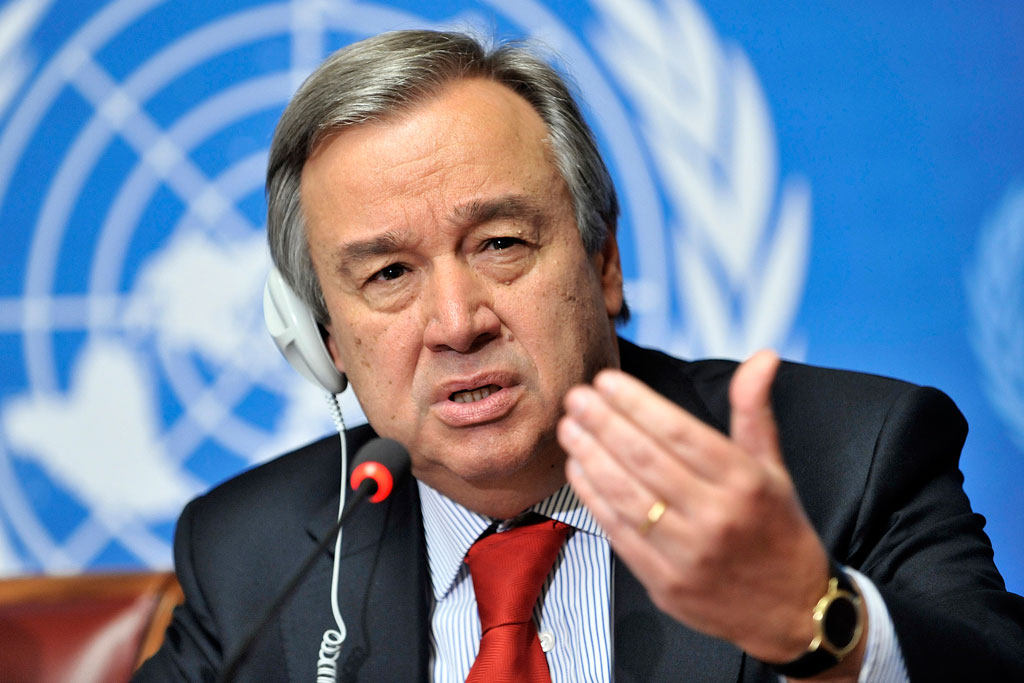
UN Secretary-General António Guterres is calling for increased adaptation funding to help vulnerable countries withstand climate shocks.
More than 40.3 million people across six East African countries face high levels of acute food insecurity in 2026, IGAD has warned.
The figure represents about 34 per cent of the population analysed in Djibouti, Kenya, Somalia, South Sudan, Sudan and Uganda.
IGAD said the number has nearly tripled from 13.9 million in 2016, highlighting the region’s worsening food crisis.
Conflict, extreme weather, displacement and economic shocks continue to drive the crisis.
Kenya Records Sharp Increase
Kenya’s arid and semi-arid areas recorded a major deterioration between April and June 2026.
About 4.1 million people, including nearly 429,500 refugees, faced high levels of acute food insecurity.
The figure was 46 per cent higher than the 2025 peak, representing nearly 1.3 million additional people.
Poor October–December 2025 rains contributed to crop failures, pasture shortages and water stress across affected areas.
However, current assessments show conditions have since shifted in parts of Kenya. About 2.7 million people faced Crisis-level food insecurity or worse between July and October 2026.
UN Calls for More Climate Funding
UN Secretary-General António Guterres has urged stronger investment in climate adaptation and early-warning systems.
He has called for efforts to triple adaptation finance by 2030 and expand early-warning coverage globally by 2027.
Guterres has also stressed the need to strengthen the Loss and Damage Fund and support vulnerable communities facing climate shocks.
Meanwhile, IGAD is urging governments and partners to focus more on prevention than emergency response.
The regional body wants stronger early-warning systems, climate-resilient agriculture, better food markets and improved data.
Heavy Rains Could Bring New Risks
East Africa could also face above-average rainfall during the October–December 2026 season.
The rains could improve crop and livestock conditions. However, they could also increase flood risks in parts of Kenya, Ethiopia, Somalia and Uganda.
More than nine million children aged six to 59 months across the six countries require treatment for acute malnutrition.
Around 19 million people are forcibly displaced, including internally displaced people, refugees and asylum-seekers.
IGAD says early action, stronger livelihoods and cross-border cooperation will be critical as the region prepares for new climate shocks.