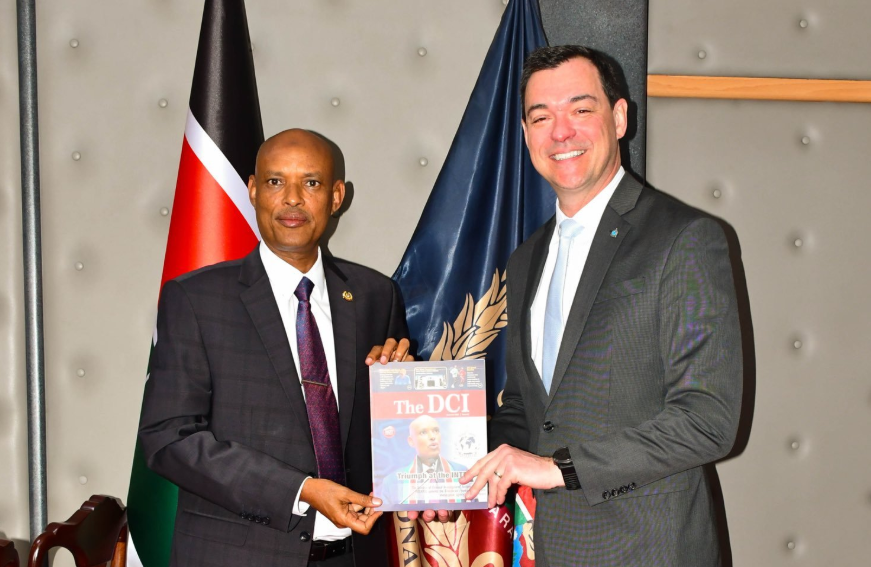
The Directorate of Criminal Investigations (DCI) has held strategic talks with INTERPOL officials to strengthen international crime-fighting cooperation.
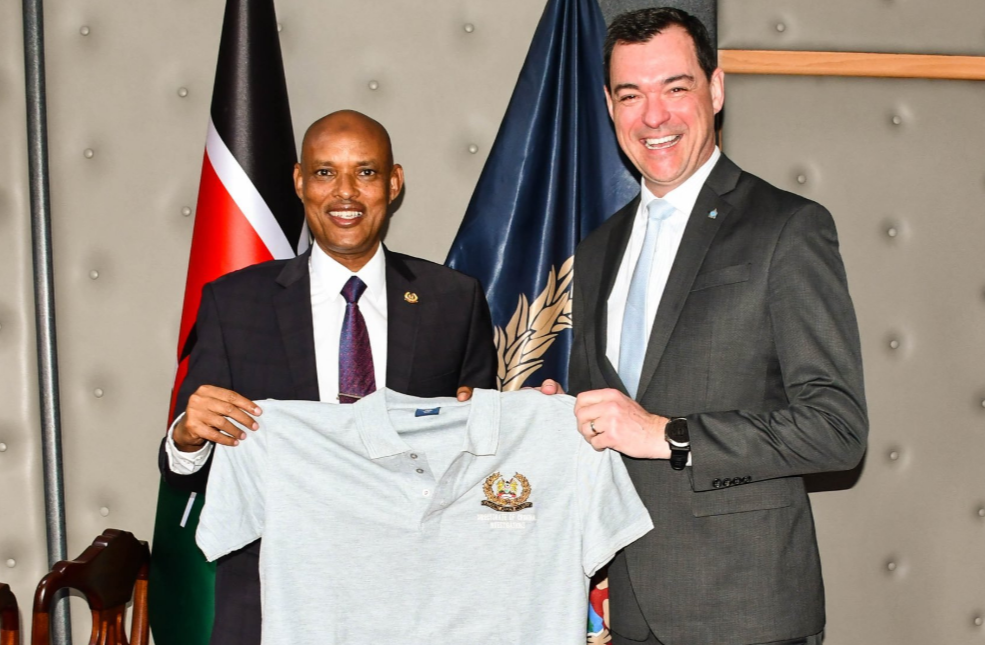
INTERPOL Executive Director for Investigation Support Stephen Fry led a delegation to DCI headquarters in Nairobi. The team met DCI Director Mohamed I. Amin for discussions on security coordination and cross-border investigations.
The meeting focused on improving cooperation between the DCI and INTERPOL’s key installations in Kenya. These include the National Central Bureau (NCB) Nairobi and the Regional Bureau for Eastern Africa.
DCI and INTERPOL Target Cross-Border Crimes
During the engagement, officials discussed joint measures to tackle transnational organised crime. Their priorities included money laundering, cybercrime, fraud and terrorism financing. They also explored ways to strengthen investigations involving criminal networks operating across national borders.
Additionally, the two institutions agreed to enhance strategies for tracing and recovering proceeds of cross-border financial crimes. These efforts aim to improve the ability of investigators to follow illicit funds and disrupt criminal operations.

Joint Training and Intelligence Sharing
The discussions also covered capacity building for Kenyan law enforcement officers. Both sides outlined plans for advanced joint training and access to resources. These initiatives will help investigators respond to emerging security threats.
Furthermore, the proposed cooperation framework emphasises faster information and intelligence sharing. Improved coordination could help authorities identify suspects, trace fugitives and support investigations across jurisdictions.
Mohamed Amin’s Role in INTERPOL Leadership
The meeting comes as DCI Director Mohamed I. Amin serves as Africa’s delegate to the INTERPOL Executive Committee.
His position provides an additional link between Kenya’s investigative leadership and the international policing organisation.
The engagement reflects efforts by the DCI and INTERPOL to strengthen operational cooperation. It also highlights the importance of international partnerships in addressing crimes that extend beyond national borders.
Through coordinated investigations, intelligence exchange and joint training, the two institutions seek to improve their response to complex security threats.