

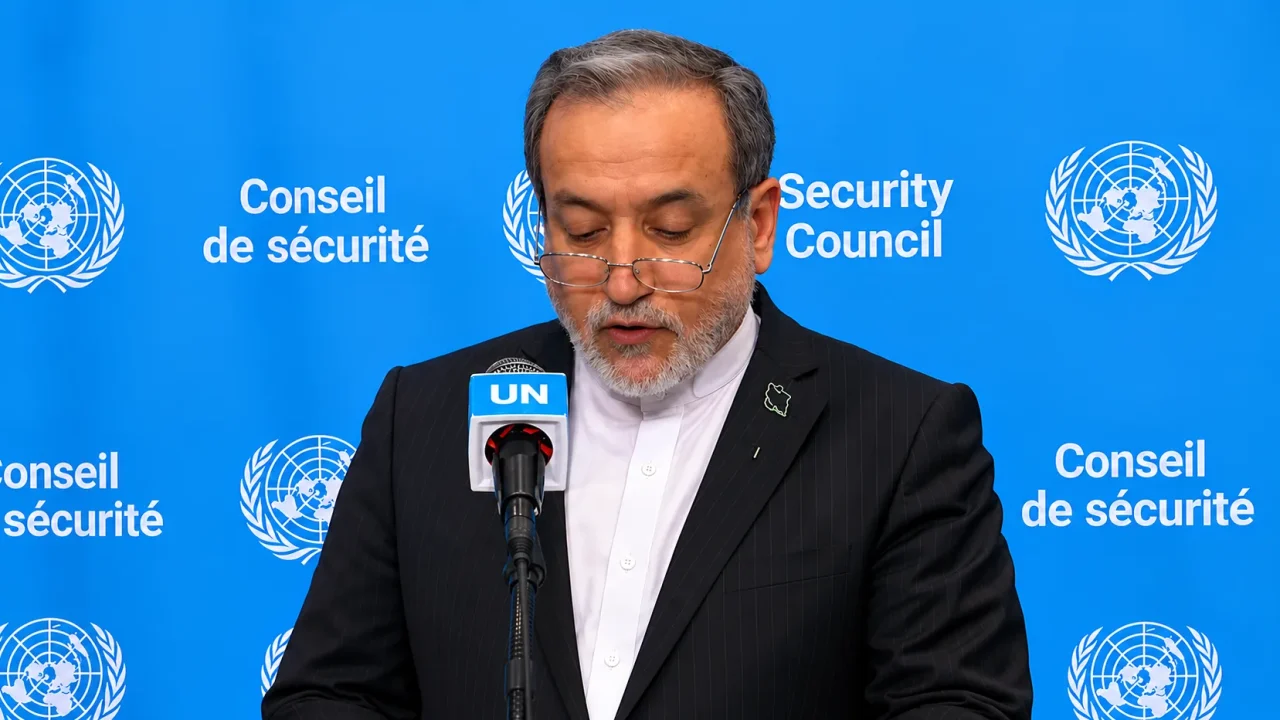
Iranian Foreign Minister Abbas Araghchi outlined a proposal to restore shipping through the Strait of Hormuz during remarks at the UN in New York.
Iran says normal shipping could resume within a week if Washington meets conditions in a June agreement, with the proposal delivered through Qatar.
Iran has proposed a deal to the United States that could restore normal shipping through the Strait of Hormuz within seven days, Foreign Minister Abbas Araghchi said at the United Nations in New York.
Araghchi said the offer depends on Washington meeting conditions already set out in a memorandum of understanding signed in June. The proposal was delivered through Qatar, leaving the next decision with the US, he said.
Washington had not issued a formal response to the proposal. A US official said constructive discussions were continuing through mediators, including on nuclear matters, but maintained that the United States was under no pressure to conclude an agreement quickly.
Iran points to June agreement
Araghchi did not detail the specific actions Tehran expects Washington to take. He said they were existing commitments under the June memorandum rather than new demands, and argued that preparations were in place if the US was willing to reach a deal.
Iranian President Masoud Pezeshkian also said acceptance of the proposal would allow the ceasefire process to begin immediately. He pointed to the earlier agreement signed in Pakistan as the basis for restoring the situation that existed before the conflict.
Pezeshkian said Iran would allow United Nations nuclear inspectors into the country, with arrangements for inspections to be negotiated. He also rejected allegations that Iran was seeking to develop a nuclear weapon.
The 14-point memorandum, signed on 18 June, was intended to establish a ceasefire and restore at least some shipping through the Strait of Hormuz. It stipulated that Iran would not acquire a nuclear weapon and that the US, Iran and their allies would halt military operations across all fronts.
Other provisions included lifting the US naval blockade and providing sanctions relief. Iran was to work towards safe passage for commercial vessels and discuss future shipping arrangements with Oman. The agreement subsequently unravelled as both sides resumed attacks.
Shipping disruption raises economic stakes
The conflict began with US and Israeli air strikes on Iran on 28 February. Tehran retaliated against Israel, US bases in the Gulf and Washington’s Arab Gulf allies, while also blocking the strait.
Before the war, roughly 20 per cent of global oil and liquefied natural gas passed through the waterway. Disruption to that traffic has driven sharp swings in energy prices and increased pressure on US President Donald Trump to find a way to end the conflict ahead of November’s Congressional elections.
Iran has attacked vessels it says attempted to transit the strait without permission. The US has struck Iranian positions around the waterway and Iranian tankers offshore, while maintaining a blockade of Iranian ports that has severely disrupted the country’s economy.
Trump has said the US has succeeded in moving oil through the strait. Figures from commodities analytics firm Kpler show a recent 10-day average of approximately 18 vessel transits daily, with traffic falling to nine on some days.
Red Sea attacks add pressure
The diplomatic effort comes as Iran-allied Houthi forces in Yemen intensify attacks aimed at disrupting Saudi oil exports through the Red Sea, adding another threat to regional energy routes.
The group captured strategically important stretches of Yemen’s Red Sea coast this month, including Mokha port near the Bab al-Mandab Strait. Houthi attacks on Saudi oil facilities have compounded the disruption.
On Saturday, the Saudi-led coalition in Yemen said it had intercepted two ballistic missiles and drones launched by the Houthis towards Saudi Arabia.
Speaking at the UN General Assembly this week, Trump said he expected an agreement with Iran after November’s elections, while also threatening further destructive military action. Araghchi responded on Friday by rejecting coercion and intimidation, saying threats to destroy Iran could not provide a foundation for peace.