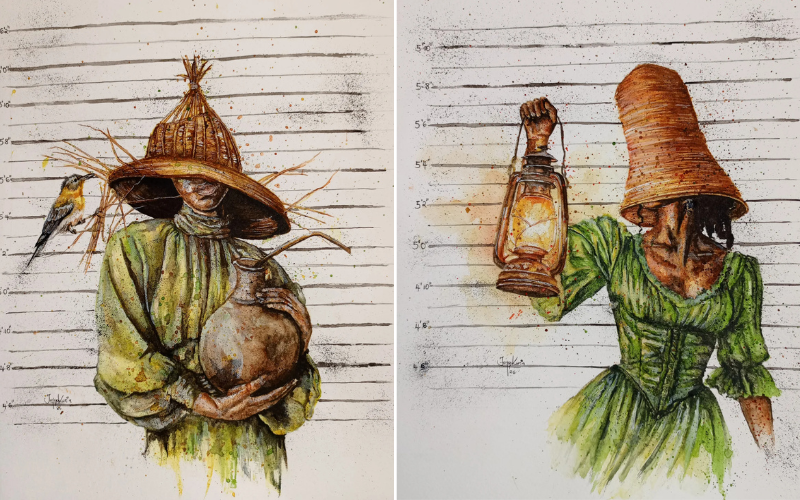
Nairobi-based artist Joyce Kuria explores culture and identity through watercolour and ink.
The Nairobi-based artist blends cultural memory with imagined futures while finding new ways to bring her work to wider audiences.
Nairobi-based artist Joyce Kuria uses watercolour and ink to explore African identity through culture, memory and imagined futures. Her work combines familiar Kenyan experiences with retro-futuristic ideas, connecting traditions with possibilities beyond the present.
Now a full-time artist, Kuria treats painting as both storytelling and a way to preserve memories. Human relationships also shape her compositions, alongside influences from local culture and international artists.
How Joyce Kuria develops her watercolour work
Kuria begins with sketches, then builds her compositions through layers of watercolour before adding fine ink details. This approach combines flowing colour with precise illustration, giving each piece its own narrative.

She favours watercolour because its fluidity allows colours to blend without requiring perfection. She also considers it the easiest medium for her to use.
Her interest in an art career took shape during art and design lessons in high school. After secondary school, she studied Fine Arts and Design at Kenyatta University. She later gained experience in Nairobi studios and built connections with other artists.
Over time, her early, simpler illustrations developed into more detailed and confident compositions. Kuria credits regular practice for that growth and encourages emerging artists to keep improving, even when progress feels slow.
Audience connections and accessible art
Rather than identify one painting as her most important, Kuria values the interpretations viewers bring. Their personal stories can reveal meanings she had not considered when creating a piece.
That exchange also informs how she sells her work. Social media and exhibitions remain important outlets for original paintings, but their prices can place them beyond some admirers’ budgets.
To reach more people, she reproduces selected artworks on merchandise. This gives audiences another way to engage with her creations without buying an original painting.
Meanwhile, her recent participation in the House of Kuria exhibition at H F Gallery in Kibera highlighted family creativity. The exhibition brought her watercolour and ink pieces together with artworks by members of her family.
Recognition beyond gender
Despite her progress, Kuria describes the art industry as male-dominated. She says she has sometimes needed to work harder to prove herself within it.
She also challenges the tendency to introduce women in creative careers primarily through their gender. In her view, recognition should centre on the work rather than the label of a female artist. She contrasts this with how people describe women working as accountants or teachers.
Kuria is now developing a new collection. Beyond that project, she hopes to attract more people to traditional art while continuing to explore culture and identity. Her imagined futures remain rooted in the memories and relationships that inform her work.