

Why the U.S. Wants Kenya in Ebola Monitoring Plan

On May 28, 2026, the Ministry of Health confirmed discussions with the United States government regarding Ebola preparedness.
The talks emerged after reports claimed the U.S. plans to send exposed Americans to Kenya for monitoring and treatment.
Consequently, the reports sparked widespread debate across Kenya over the country’s healthcare capacity and outbreak preparedness.
Additionally, officials clarified that the discussions focus on strengthening international health security cooperation.
Why the U.S. Chose Kenya
Reports indicate the United States views Kenya as a strategic regional medical and transport hub.
Kenya hosts advanced referral hospitals, established disease surveillance systems, and strong international health partnerships.
Additionally, Nairobi serves as East Africa’s major aviation and humanitarian coordination center.
Consequently, international agencies frequently rely on Kenya during regional health emergencies and outbreak responses.
The country also maintains active collaborations with global organizations involved in disease control and emergency preparedness.
Kenya Confirms Zero Ebola Cases
Health officials emphasized that Kenya currently has no confirmed or suspected Ebola infections.
Additionally, surveillance teams have screened more than 55,000 travelers entering the country through airports and border points.
Authorities isolated 10 suspected cases during routine monitoring operations for laboratory testing.
Consequently, all tested samples returned negative Ebola results after medical analysis.
Officials insisted that Kenya remains safe despite rising regional Ebola concerns.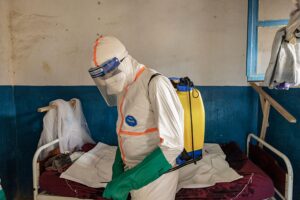
READ ALSO: DRC Cancels World Cup Camp Amid Deadly Ebola Outbreak
Government Intensifies Emergency Preparedness
The government has strengthened surveillance systems across several high-risk regions nationwide.
Officials identified 22 counties requiring heightened monitoring due to their strategic border locations.
These include Busia, Bungoma, Turkana, and other transit regions.
Additionally, the ministry deployed 118 rapid response officers prepared to handle potential outbreaks immediately.
The teams remain ready for screening, contact tracing, quarantine support, and emergency medical response operations.
Consequently, health authorities continue tightening preparedness measures across the country.
Aden Duale Defends International Cooperation
Health Cabinet Secretary Aden Duale defended the cooperation talks with the United States.
He stated that Kenya continues participating in global disease surveillance and outbreak management partnerships.
Additionally, he noted that international cooperation strengthens national preparedness and healthcare systems.
However, reports about possible quarantine arrangements triggered mixed reactions from Kenyans and health unions.
Consequently, concerns emerged regarding the country’s ability to manage additional public health pressure.
Regional Ebola Outbreak Raises Alarm
East African countries remain on high alert following a severe Ebola outbreak in Uganda and the Democratic Republic of Congo.
The outbreak involves the dangerous Bundibugyo strain of the Ebola virus.
Additionally, infections have reportedly surpassed 1,000 confirmed cases across affected regions.
Consequently, neighboring countries continue strengthening border surveillance and emergency response systems.
As discussions continue, Kenyan authorities insist the country remains fully prepared for any potential Ebola threat.