The Nairobi summit adopted a 29-point plan to strengthen public trust in institutions.
Delegates backed proposals for a UN financing facility and a Kenya-hosted council to rebuild public confidence and track reforms.
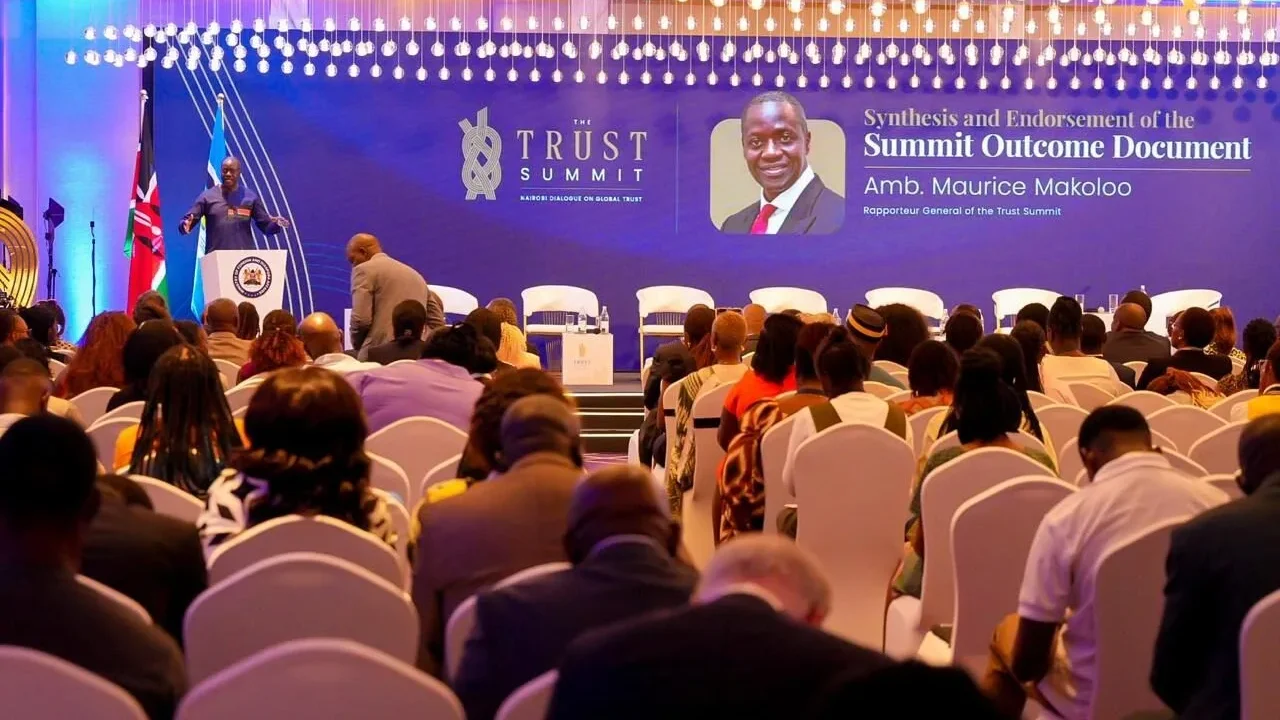
The inaugural Trust Summit in Nairobi adopted a 29-point action plan to rebuild public confidence in institutions. It proposes a United Nations financing facility and a Nairobi-based council to help advance reforms.
Participants adopted the Nairobi Call to Action on Global Trust after deliberations from October 21 to 23. Government representatives joined business leaders, civil society, academics, technology experts, media and young people at the meeting.
However, organisers stressed that measurable results, rather than declarations, would determine the commitments’ value. Foreign Affairs Principal Secretary Korir Sing’Oei said the next phase must deliver tangible benefits for citizens.

Trust Summit proposes financing and oversight
The proposed Global Trust Facility would accept voluntary contributions from state and non-state actors for an initial four years. The United Nations Development Programme would administer it, subject to further development and implementation.
Potential beneficiaries include national accreditation bodies, data protection and cybersecurity authorities, and judicial cooperation mechanisms. The facility could also support regulatory trust indices.
Meanwhile, a proposed Coalition on Global Trust would allow governments and non-state actors to exchange knowledge and coordinate initiatives. Kenya would host the Nairobi Trust Council, bringing together prominent public, private and philanthropic sector figures to review progress.
To support accountability, the summit secretariat will prepare an implementation framework with monitoring, reporting and biennial reviews. The agreement also encourages international organisations to study the economic costs of distrust every two years.
Four priorities for institutional reform
The framework covers public institutions, multilateral reform, digital trust, and inclusion. It proposes an annual Regulatory Trust Index to assess confidence in regulators at national, regional and global levels.
It also seeks closer regulatory cooperation through the East African Community and African Continental Free Trade Area. This aims to reduce unnecessary compliance costs linked to fragmented rules.
On global governance, delegates called for more representative, transparent and accountable institutions. Proposals include a UN Charter review conference under Article 109, stronger health governance and fair access to medical countermeasures.
In addition, the plan calls for predictable climate financing, technology transfer and capacity building for vulnerable countries.
Digital safeguards and county engagement
The agreement urges faster implementation of the Global Digital Compact and stronger international cooperation on artificial intelligence. It also seeks meaningful African participation, greater transparency around algorithms and synthetic content, and protections for journalism and scientific integrity.
On inclusion, the framework seeks meaningful participation by young people, women, persons with disabilities and excluded communities. It also supports wider access to jobs, entrepreneurship and finance for young people.
Sing’Oei said planned county engagement campaigns would allow regulators and institutions to explain decisions and demonstrate accountability. Meanwhile, organisers plan to expand Trust Dialogues internationally and convene the main summit every two years.