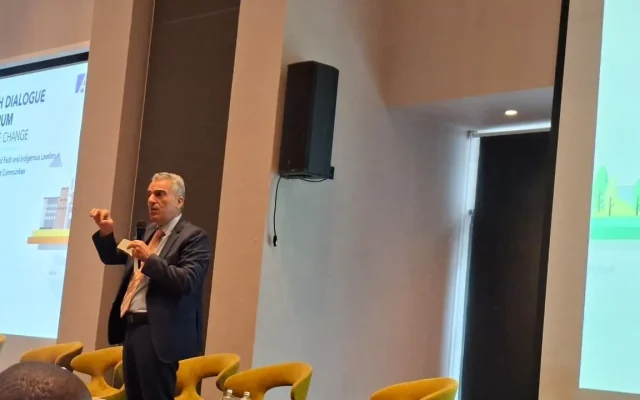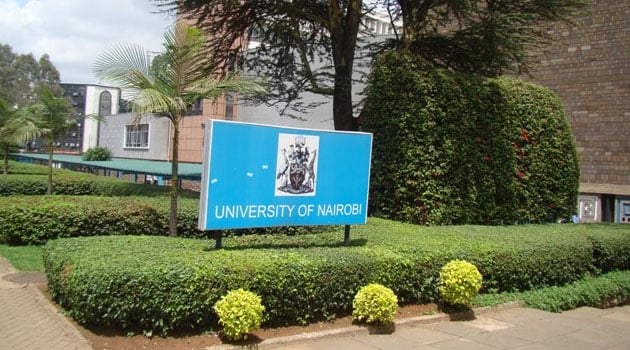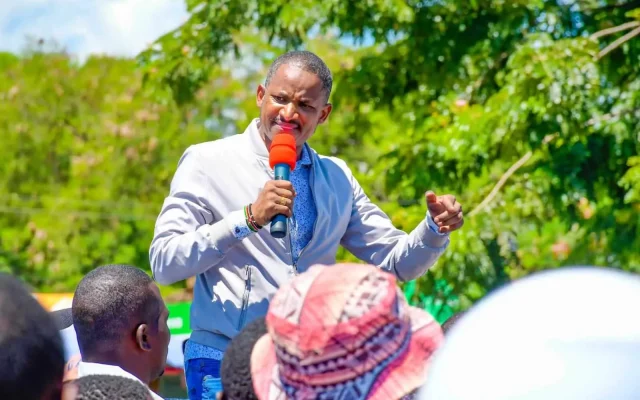
The Nairobi interfaith dialogue focused on climate finance accountability and community environmental action.
Faith and indigenous leaders pledge community action while urging authorities and partners to ensure climate funds reach vulnerable populations.
Faith and indigenous leaders have called for transparent climate funding, pledging to mobilise communities and hold authorities accountable. Meeting in Nairobi, they urged governments and partners to ensure financing reaches vulnerable populations.
The Embassy of Israel in Kenya and Konrad-Adenauer-Stiftung (KAS) organised the interfaith dialogue. Participants also committed to practical action, including tree planting, water conservation, climate-smart farming and ecosystem restoration.
Climate funding accountability and local action
Geoffrey Njuguna, an Inter-Religious Council of Kenya board member representing Deliverance Church-Lang’ata, said religious networks would promote environmental stewardship. He also urged scrutiny of every level of government and partners handling climate finance.

Njuguna outlined four commitments by the Indigenous Council of Kenya. These cover environmental teachings, sustainable institutional practices, community protection of natural resources and advocacy on financing accountability.
Religious institutions could also use their land and facilities for indigenous trees, rainwater harvesting, green energy and responsible waste management. Njuguna pledged to share the forum’s outcomes through the council’s nine religious coordinating bodies. He would encourage practical commitments over the next 12 months.
Religious networks urged to build partnerships
Israeli Ambassador to Kenya Gideon Behar urged faith leaders to use their moral authority to support environmental action. He said policymakers and scientists could not tackle the crisis alone.
To turn discussions into action, Behar encouraged participants to identify partners across religious communities. Suggested activities included community clean-ups, tree planting and protection of local water resources.
He also offered embassy support through expertise in water management, agriculture, technology and renewable energy. Behar hoped the dialogue would become an annual gathering with measurable results.
Meanwhile, KAS Country Director Mathias Kamp highlighted the local knowledge that faith and indigenous communities bring to climate responses. He said the forum aimed to connect religious values and indigenous wisdom with modern solutions while strengthening grassroots cooperation.
Ministry highlights finance and adaptation gaps
Thomas Lerenten Lelekoiten, deputy director of the ministry’s Climate Change Directorate, called for urgent emissions cuts and stronger adaptation measures. However, he warned that rising temperatures and increasingly severe impacts were testing existing adaptation efforts.
Lelekoiten said Kenya and international partners had mobilised more than $300 million through climate financing mechanisms. Under the model he described, two per cent went directly to communities. The resources support local climate-risk assessments and county-level responses.
Although Kenya has climate laws and action plans, Lelekoiten stressed that policies must produce practical interventions. He also highlighted the government’s target of planting 15 billion trees to restore more than 10.6 million hectares.
Catholic priest Rev. Fr Patrick Ndungu of the Archdiocese of Nairobi described environmental protection as a moral responsibility. He therefore urged congregations to conserve water, reduce waste, use sustainable transport and restore degraded environments.