

On September 23, 2026, the Central Bank of Kenya (CBK) released its 2025 Bank Supervision Annual Report, revealing the distribution of bank deposit accounts in Kenya.
The report shows that only 788,853 deposit accounts held KSh500,000 or more by December 2025. That represented about 0.94% of 84.1 million deposit accounts across commercial and microfinance banks.
Only 788,853 Accounts Hold KSh500K+
According to CBK data, Kenya had 84,111,829 deposit accounts by December 2025. However, only 788,853 accounts held balances of KSh500,000 or more.
Meanwhile, 83,309,438 accounts held less than KSh500,000. Therefore, accounts with at least KSh500,000 represented less than one percent of all deposit accounts.
High-Value Accounts Increased
The number of accounts holding KSh500,000 or more increased from 746,665 in 2024. It reached 788,853 accounts by December 2025.
This represents an increase of approximately 5.7% during the year. However, the figures do not show how many individual Kenyans hold KSh500,000 or more.
The Data Counts Accounts, Not People
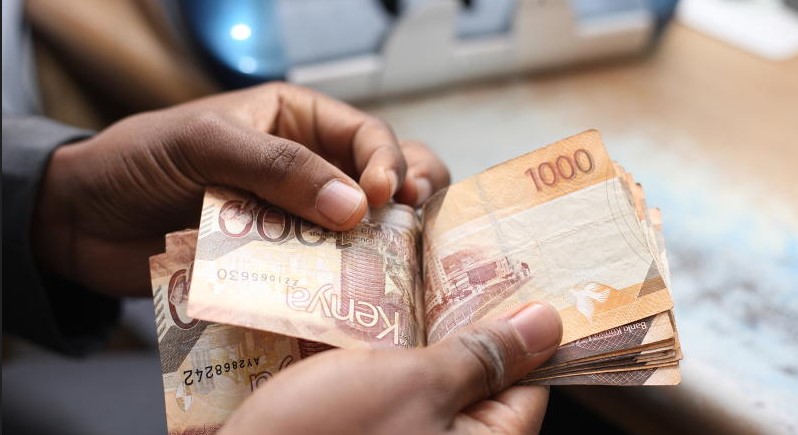
Importantly, CBK’s figures count deposit accounts rather than individual account holders. One person can therefore own several accounts across different banks. Companies and institutions can also maintain multiple high-value accounts.
Consequently, the figures should not be interpreted as showing that only 0.94% of Kenyans have KSh500,000 or more. Instead, they show the distribution of balances across reported bank deposit accounts.
Customer Deposits Reach KSh6.12 Trillion
Meanwhile, customer deposits across the banking sector continued to grow. CBK reported that customer deposits increased by 11.6% to KSh6.12 trillion in December 2025.
The figure rose from KSh5.48 trillion recorded in December 2024. The banking sector also recorded stronger overall financial performance during 2025.
What the Figures Mean
The data provides an important snapshot of Kenya’s banking sector. However, bank balances alone cannot provide a complete picture of household wealth.
Kenyans can also hold wealth through property, businesses, government securities, investment funds and other assets.
Therefore, the CBK figures should be viewed as bank-account data, rather than a direct measure of individual wealth or income inequality.