


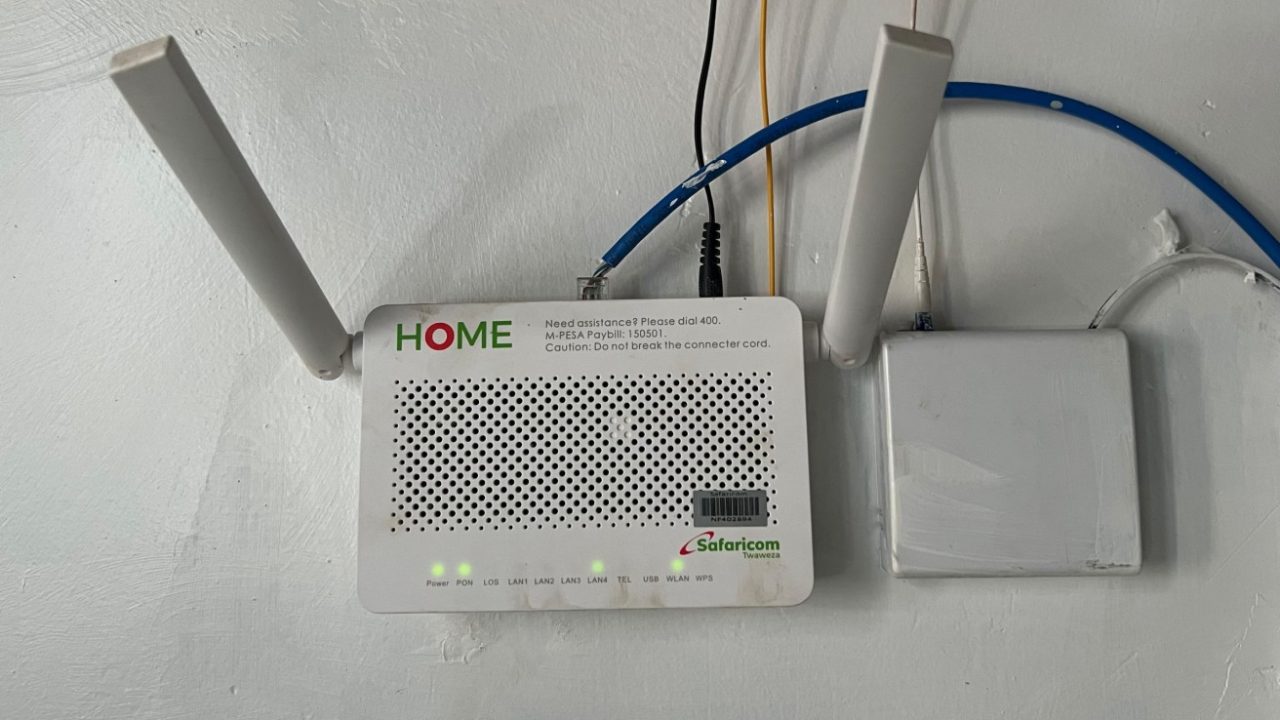
Safaricom has become the first Internet Service Provider (ISP) in Kenya to surpass one million fixed internet subscriptions, strengthening its position in the country’s growing broadband market.
According to the latest Communications Authority of Kenya (CA) data, Safaricom had 1.025 million fixed internet subscriptions by the end of June 2026.
The figure represents a 39.3% year-on-year increase from the 735,749 subscriptions recorded in June 2025.
Safaricom Leads Fixed Internet Market
Safaricom now accounts for 36.1% of Kenya’s total fixed internet subscriptions.The company’s growth has accelerated significantly in recent years.
Safaricom had about 269,397 fixed subscriptions in 2021, compared with only 40,015 in 2017. Meanwhile, Kenya’s overall fixed internet market expanded by 32.4%, reaching approximately 2.84 million subscriptions by June 2026.
How Other ISPs Compare
Safaricom leads the market, followed by other major internet providers.
- Safaricom: 1.025 million subscriptions — 36.1%
- Jamii Telecommunications (Faiba): 541,003 — 19.1%
- Wananchi Group (Zuku): 294,375 — 10.4%
- Ahadi Wireless (Konnect): 270,586 — 9.5%
- Starlink: 27,616 — 1.0%
The figures show continued competition as providers expand fibre and wireless internet networks across Kenya.

Fibre and Satellite Internet Grow
Kenya’s fixed internet market is also shifting away from older technologies. Copper-based DSL subscriptions have fallen sharply, with only 23 active subscriptions reported nationwide.
At the same time, fibre and satellite services continue to expand. Starlink, in particular, has gained a foothold in Kenya’s fixed internet market, recording 27,616 subscriptions by June 2026.
What Safaricom’s Growth Means
Safaricom’s milestone further highlights the rapid growth of fixed internet access in Kenya. As a result, more households and businesses are adopting fibre and other high-speed connections.
Meanwhile, competition among Internet Service Providers (ISPs) continues to grow as providers expand their networks and improve their services.
Moreover, the expanding market reflects the rising demand for reliable internet across different sectors. Kenyans increasingly rely on fast connections for business, entertainment, remote work, education and digital services.
Therefore, as internet usage continues to rise, ISPs are likely to focus more on network expansion, affordability and service reliability.