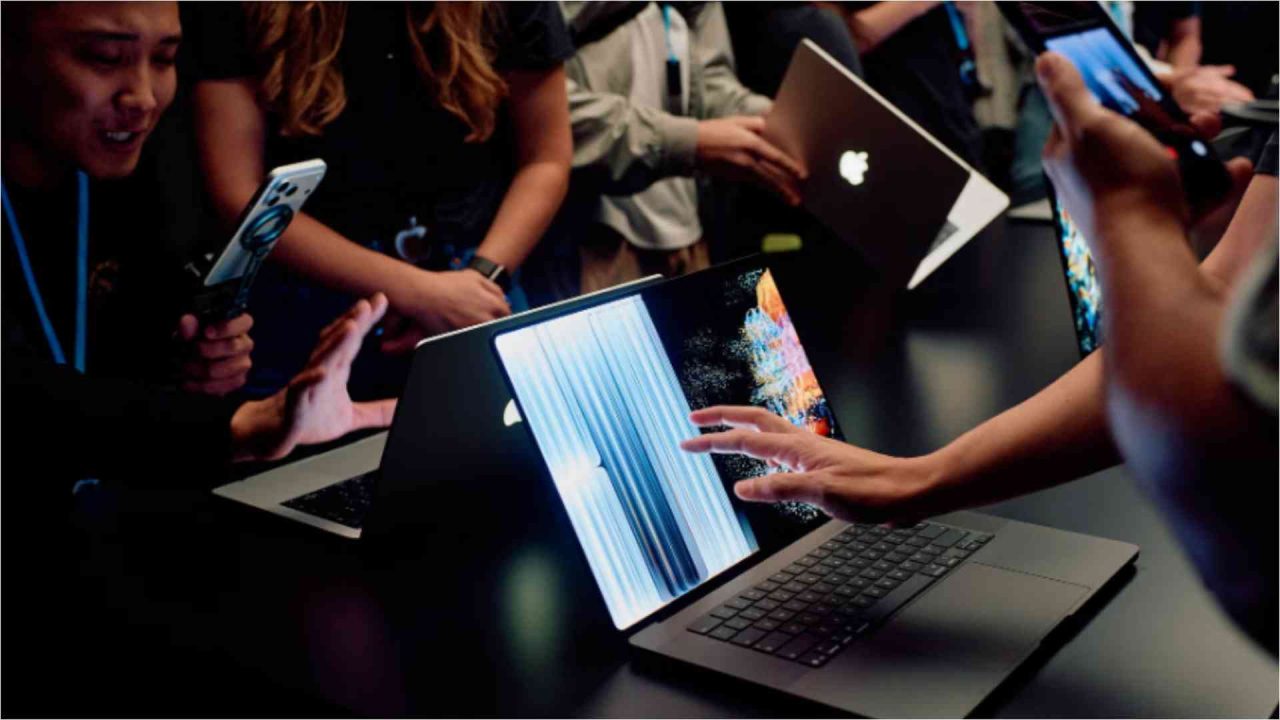
Apple’s new MacBook Pro range introduces touchscreen controls alongside a keyboard and trackpad.
Apple adds direct touch controls, OLED displays and Dynamic Island to its flagship laptops, with sales starting November 6 in selected markets.
Apple has unveiled its first touchscreen MacBook Pro, with the 14-inch model starting at approximately Sh377,000. The launch marks a change in the company’s long-standing approach to laptop controls.
The redesigned range also includes a 16-inch version starting at about Sh442,000. These figures reflect approximate currency conversions from US prices of $2,899 and $3,399, respectively.
Pre-orders are open, while sales will begin on November 6 in selected markets. The laptops retain a traditional keyboard and trackpad alongside the new touch controls.

Touchscreen MacBook Pro adds OLED display
Users can tap, scroll and interact directly with content on Apple’s PROLED XDR display. The screen uses tandem OLED technology and supports a variable refresh rate of up to 120Hz.
It also offers a contrast ratio of 10,000,000:1. Apple is targeting creative professionals and app developers with tools for working directly on the screen.
For example, users can move slides between presentations, test applications and play virtual musical instruments. Touch input therefore adds another way to handle content without replacing the laptop’s existing controls.
Meanwhile, Dynamic Island brings a feature previously associated with the iPhone to the MacBook interface. It provides access to notifications, Live Activities, Spotlight and Siri AI.
M5 chips and a shift in laptop design
The new machines use Apple’s M5 Pro and M5 Max chips. Configurations offer up to 128GB of unified memory and 16TB of storage.
Apple has also made the laptops thinner and lighter. The 14-inch model weighs about three pounds, while the 16-inch version weighs about four pounds. The company claims battery life of up to 24 hours.
The touchscreen launch changes a position Apple maintained even as touch controls became standard on iPhones and iPads. Co-founder Steve Jobs previously questioned the comfort of using vertically positioned touchscreens for long periods.
Apple later introduced the Touch Bar on the MacBook Pro in 2016, but eventually discontinued that feature. The new display instead brings direct touch interaction to the laptop’s main screen.
As a result, the redesigned range moves closer to the iPad’s touch-driven experience while keeping the traditional Mac interface.