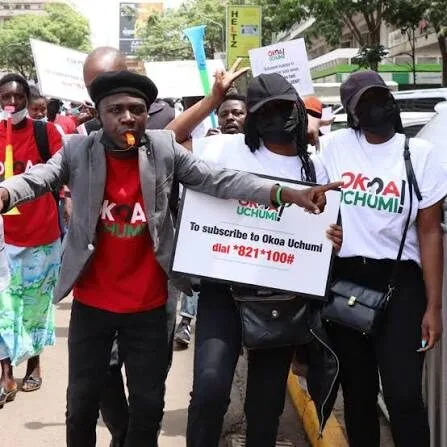
Okoa Uchumi is calling for public access to Kenya’s IMF governance assessment.
The campaign wants the government to publish the assessment, table it in Parliament and set deadlines for implementing its recommendations.
Okoa Uchumi has renewed calls for the government to publish the IMF governance report and table it in Parliament. The campaign accuses the Executive of withholding a critical assessment of corruption and public resource management.
It also wants a clear implementation roadmap, with timelines for acting on the report’s recommendations. In a statement, the campaign argued that citizens and lawmakers must have access to scrutinise the findings.
The demand follows Geoffrey Wandeto’s request for answers from Parliament’s Departmental Committee on Finance and National Planning. Okoa Uchumi said Parliament expects a response within two weeks, but the Executive has not announced a release date.

IMF governance report faces publication demands
According to Okoa Uchumi, the government requested the diagnostic in September 2024. The campaign said an initial report arrived in December 2025, followed by a final version in June 2026 after review.
Meanwhile, the IMF said in June 2026 that it had shared a draft assessment with Kenya’s government. The Fund was awaiting feedback and said publication required government consent.
The diagnostic followed public anger over living costs, taxation and accountability during the 2024 Finance Bill protests. Its scope covered procurement, taxation, public spending, market regulation, the rule of law and financial sector oversight.
As part of that process, the IMF conducted a scoping mission in March 2025. A technical assistance mission followed from June 16 to June 30, with World Bank staff participating.
The team consulted officials, Parliament, oversight bodies, civil society, businesses and development partners. The IMF said the exercise aimed to identify economically significant governance risks and develop a prioritised reform plan.
World Bank findings sharpen accountability calls
Okoa Uchumi said recent World Bank findings strengthened the case for releasing the separate IMF assessment. The bank launched its 34th Kenya Economic Update on November 4, highlighting corruption’s impact on growth and employment.
Addressing governance constraints could raise Kenya’s GDP by up to 20 per cent by 2035, the bank said. Such reforms could also support millions of additional and better-quality jobs.
The bank estimated that corruption and collusion contribute up to two percentage points of GDP to annual fiscal deficits. As a result, these losses increase borrowing needs and reduce resources available for development.
It also found that 39 per cent of firms view corruption as a major business constraint. Medium-sized enterprises face particular pressure from bribe demands, while governance weaknesses raise electricity, logistics and land costs.
Okoa Uchumi argued that withholding the diagnostic prevents citizens from examining governance failures and proposed reforms. It urged the government to honour the accountability demands behind the 2024 protests by opening the findings to public scrutiny.