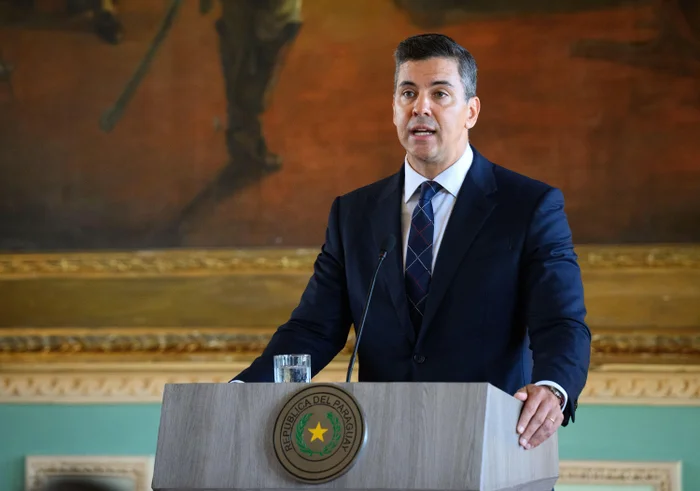
Paraguay’s Congress has rejected President Santiago Peña’s resignation offer and moved forward with impeachment proceedings. The decision followed a banking crisis that triggered protests and left millions of customers temporarily unable to access their money.
Peña announced his intention to resign on Thursday, November 5, 2026. He made the announcement in a video posted on X as lawmakers debated his possible impeachment. However, lawmakers proceeded with the removal process instead of allowing him to leave office without facing trial.
Peña Offers to Resign Amid Growing Pressure
In his televised message, Peña said he wanted to protect Paraguay’s stability, social peace and democratic institutions. He also apologised to citizens who felt he had failed them. The president said his decision reflected the need to put the country’s interests ahead of his position.
Nevertheless, his announcement did not stop the impeachment process. Paraguay’s Chamber of Deputies voted unanimously, 78-0, to approve impeachment proceedings.
The motion received support from lawmakers within Peña’s ruling Colorado Party. The case then moved to the Senate, which is responsible for conducting the impeachment trial.

Why Congress Wants an Impeachment Trial
Opposition lawmakers argued that accepting Peña’s resignation could allow him to retain certain legal protections. Under Paraguay’s Constitution, former democratically elected presidents become senators for life. However, a president convicted through impeachment loses that status.
Lawmakers therefore want the process completed before Peña leaves office. The Senate scheduled proceedings for Friday, November 6, giving Peña an opportunity to present his defence.
Meanwhile, Paraguay’s Attorney General Emiliano Rolón Fernández ordered three criminal investigations into the banking crisis. The investigations cover regulatory oversight, the bank’s collapse and the handling of public funds.
Peña has denied wrongdoing and said he would cooperate with investigators. He has not been charged in connection with the crisis.
Ueno Bank Collapse Triggers Political Crisis
The controversy centres on Ueno Bank, a major digital lender that regulators placed under intervention after finding serious solvency problems.
The institution served approximately 2.9 million customers, representing about 60 per cent of Paraguay’s adult population.
It also held hundreds of millions of dollars in public-sector deposits, including pension-related funds. The bank’s shutdown disrupted access to customer accounts and triggered protests in the capital, Asunción.
Authorities have detained senior bank executives and charged 27 officials and associates with various offences. Prosecutors are also examining allegations involving conflicts of interest and the handling of public funds. Peña previously held shares in the holding company linked to Ueno but said he sold them in 2025.
Paraguay Awaits Senate Decision
The impeachment proceedings have placed Peña’s political future under serious uncertainty. The Senate must determine whether the evidence supports his removal from office. A conviction would also affect his eligibility for a lifetime Senate seat.
Meanwhile, authorities face pressure to restore access to affected deposits and establish accountability for the bank’s collapse. The crisis has therefore become both a financial and political challenge for Paraguay.