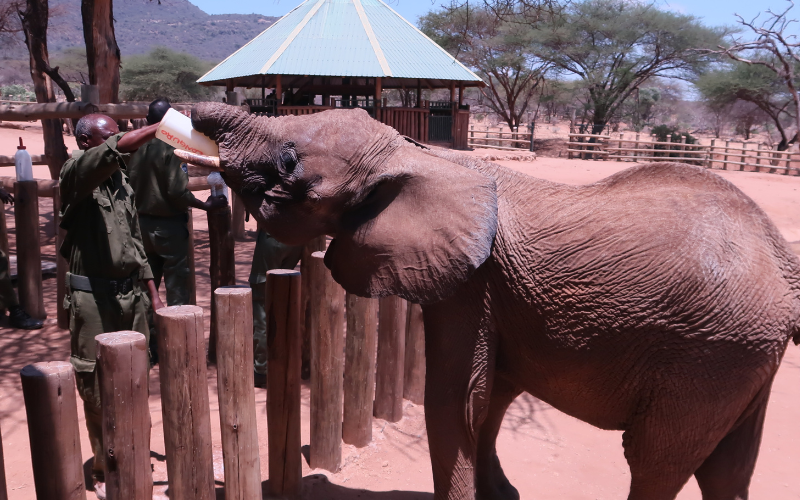
Reteti Elephant Sanctuary links elephant care with livelihoods for local Samburu women.
Reteti Elephant Sanctuary buys more than 1,000 litres of goat milk daily, linking orphaned elephant care to women’s earnings and community services.
Reteti goat milk purchases support approximately 1,250 local women as the Samburu community-led sanctuary cares for orphaned elephants. The facility buys more than 1,000 litres daily, creating a market for suppliers in northern Kenya.
The earnings give women in remote villages an additional income source where prolonged drought frequently threatens pastoralist livelihoods. Meanwhile, wildlife tourism helps support local jobs, school bursaries and hospital bills.
Reteti goat milk market strengthens livelihoods
The local Samburu community led the initiative that established Reteti Elephant Sanctuary in 2016. Its work centres on rescuing and rehabilitating orphaned elephants, then preparing them for release into the wild.

According to elephant keeper Russia Lenanyoike, the sanctuary currently cares for 52 young elephants. It has also successfully returned 23 elephants to the wild.
Lenanyoike put payments to local milk suppliers at about Sh6.4 million, but did not specify the period covered. Beyond milk purchases, the sanctuary employs 140 keepers, offering further employment opportunities for the surrounding community.
Tourism brings an estimated 5,000 to 10,000 visitors each year, with international travellers making up the larger share. These visits provide another income stream alongside the sanctuary’s conservation work.
Rasha, identified only by one name, said 60 per cent of tourism revenue goes to the local community. The remaining 40 per cent supports sanctuary operations, while the community share helps finance bursaries and hospital bills.
Rescued calves prepare for life in the wild
However, prolonged drought, shrinking water sources and human-wildlife conflict continue to threaten elephants in the region. Some calves fall into deep, rocky wells that communities dig along seasonal riverbeds for water.
Others lose their mothers through deaths or conflicts involving people. Operations officer Patricia Parkeri said each elephant has a different rescue history and circumstances surrounding its mother’s loss.
If reunion with its mother proves impossible within 72 hours, a rescued calf enters rehabilitation at Reteti. There, staff provide medical attention and gradually introduce elephants into groups to prepare them for eventual release.
Keepers also sing traditional Samburu songs during feeding, bringing local cultural practices into daily care. Besides elephants, the sanctuary cares for giraffes, zebras, kudu, gerenuk and a young buffalo.
Access challenges limit tourism opportunities
Despite these benefits, poor roads, remoteness and inadequate airstrips make access difficult for visitors. Better transport infrastructure could improve access and potentially expand tourism earnings for neighbouring communities.
The sanctuary’s approach also aligns with Kenya Tourism Board efforts to develop the Northern Kenya tourism circuit. Those efforts encourage domestic travellers to explore destinations beyond established safari routes.