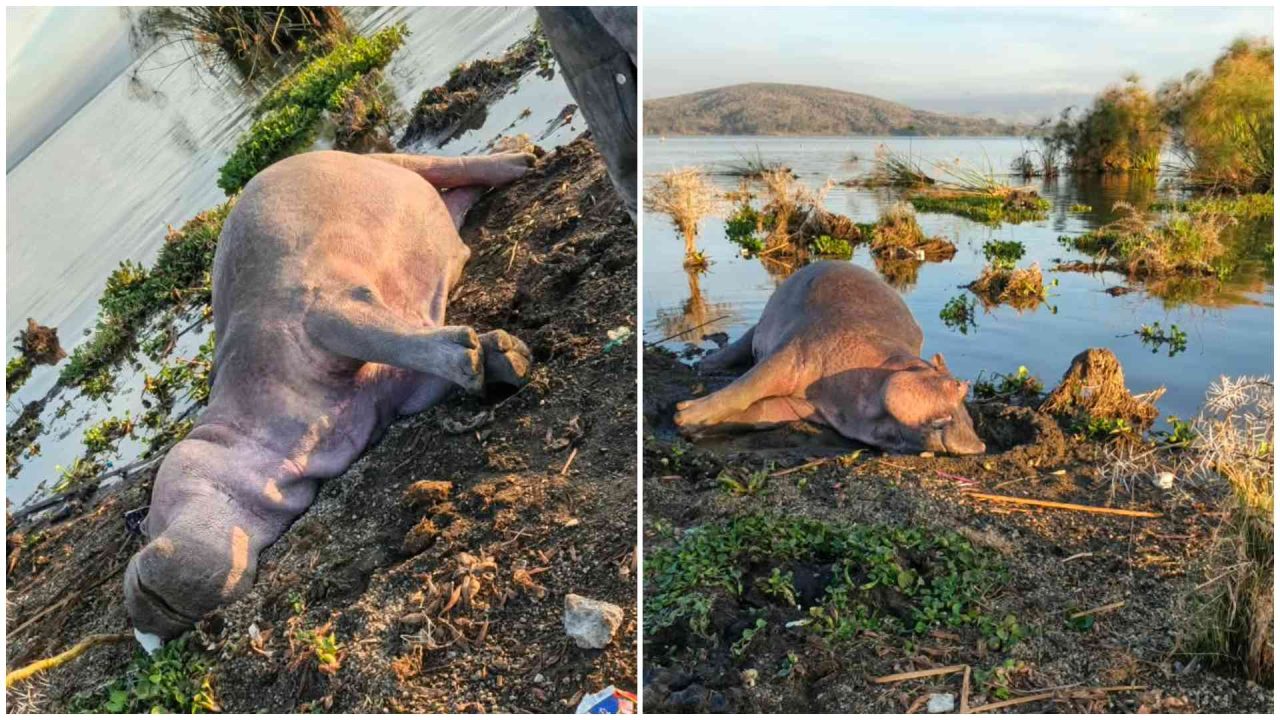
KWS is investigating the deaths of hippos at Lake Naivasha.
KWS scientists will examine the animals after residents raised fears of poisoning or exposure to chemicals on nearby crops.
The Kenya Wildlife Service (KWS) is investigating hippo deaths at Lake Naivasha amid fears of poisoning. Members of the public found the animals along the shore, with some struggling to breathe before dying.
KWS communication officer Duncan Juma said the agency had yet to establish the cause. Scientists have collected the bodies, and KWS will issue a comprehensive statement after conducting postmortem examinations.
Hippo deaths raise fears over contaminated crops
Laban Ewoi, a member of the Kamere Beach management unit, said one hippo was still alive when they arrived. However, the animal was struggling to breathe, and he noted no visible physical injuries.

The hippos lay a few metres apart, prompting suspicions that they had eaten something containing chemicals. Ewoi suggested contaminated farm produce could explain the deaths, while other allegations pointed to freshly sprayed crops.
Those suspicions remain unconfirmed as KWS investigates. The deaths come as rising lake levels push hippos beyond their usual grazing areas. Floodwater has submerged pasture, forcing the animals towards neighbouring farms and homes in search of food.
Rising water levels increase encounters
Ewoi said more hippos had strayed onto beaches and nearby farms as water levels rose over the past year. He also said the animals had destroyed crops and moved onto Moi South Lake Road while seeking pasture.
Encounters have also endangered people fishing on foot. Ewoi said hippos had killed scores of foot fishermen, while attacks around the lake have also left people injured.
Meanwhile, the Wildlife Research and Training Institute has described Lake Naivasha’s hippo population as healthy despite increasing attacks. A census conducted last year counted more than 500 hippos. The institute considered that population optimal and said numbers were rising gradually.