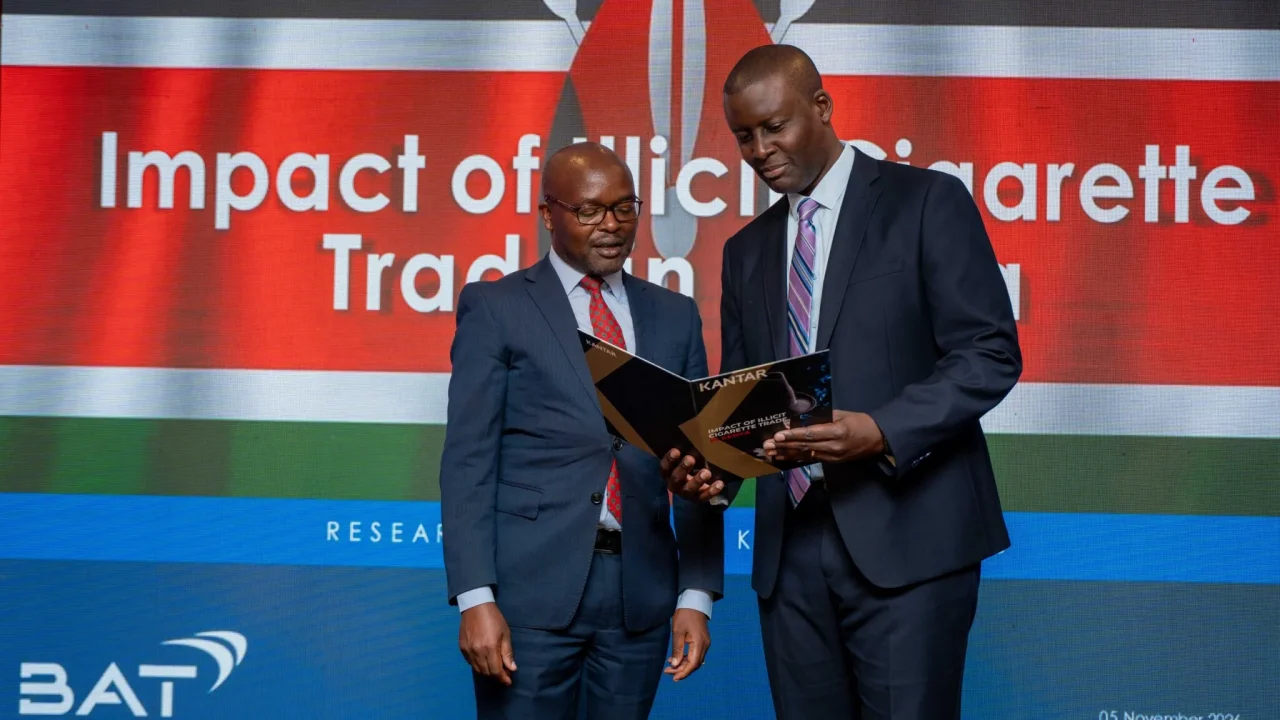
A Kantar study commissioned by BAT Kenya estimates illicit products accounted for 45.1 per cent of cigarette consumption in 2025.
Illicit cigarette trade cost Kenya an estimated Sh47 billion in lost excise duty and VAT between 2021 and 2025. A Kantar study commissioned by BAT Kenya puts the illicit share of cigarette consumption at 45.1 per cent in 2025.
That means nearly one in every two cigarettes consumed in Kenya was illicit, the study estimates. Its definition covers cigarettes with unpaid applicable taxes or products that fail to meet other regulatory requirements.
Illicit cigarette trade and revenue losses
The study illustrates the estimated tax loss by comparing it with spending on key government programmes. It says Sh47 billion could fund about 48,000 affordable houses, 19 million subsidised fertiliser bags or 12 million maize bags.
The research also links rising excise taxes to falling revenue from the legal cigarette industry. Between 2018 and 2022, cigarette excise duty rose by a cumulative 55 per cent. Over the same period, excise revenue from the legal industry fell by Sh1 billion.

Meanwhile, the study estimates that jobs supported across the legal tobacco value chain declined by 4,700 between 2022 and 2025. It also puts the industry’s declining contribution to Kenya’s Gross Domestic Product at Sh37.7 billion over that period.
BAT Kenya urges stronger enforcement
Responding to the findings, BAT Kenya Managing Director Sidney Wafula urged the government to sustain action against illicit trade. He called for stronger border controls, faster investigations and prosecutions, as well as penalties that deter offenders.
Wafula also proposed an enhanced track-and-trace system to improve oversight of tobacco products throughout the supply chain. He warned that growing illicit trade could undermine legitimate businesses, government revenue and employment.
In addition, he warned that the trade exposes consumers to products outside established regulatory controls. Wafula said BAT Kenya remained committed to working with government agencies to combat illicit trade and protect legitimate businesses.