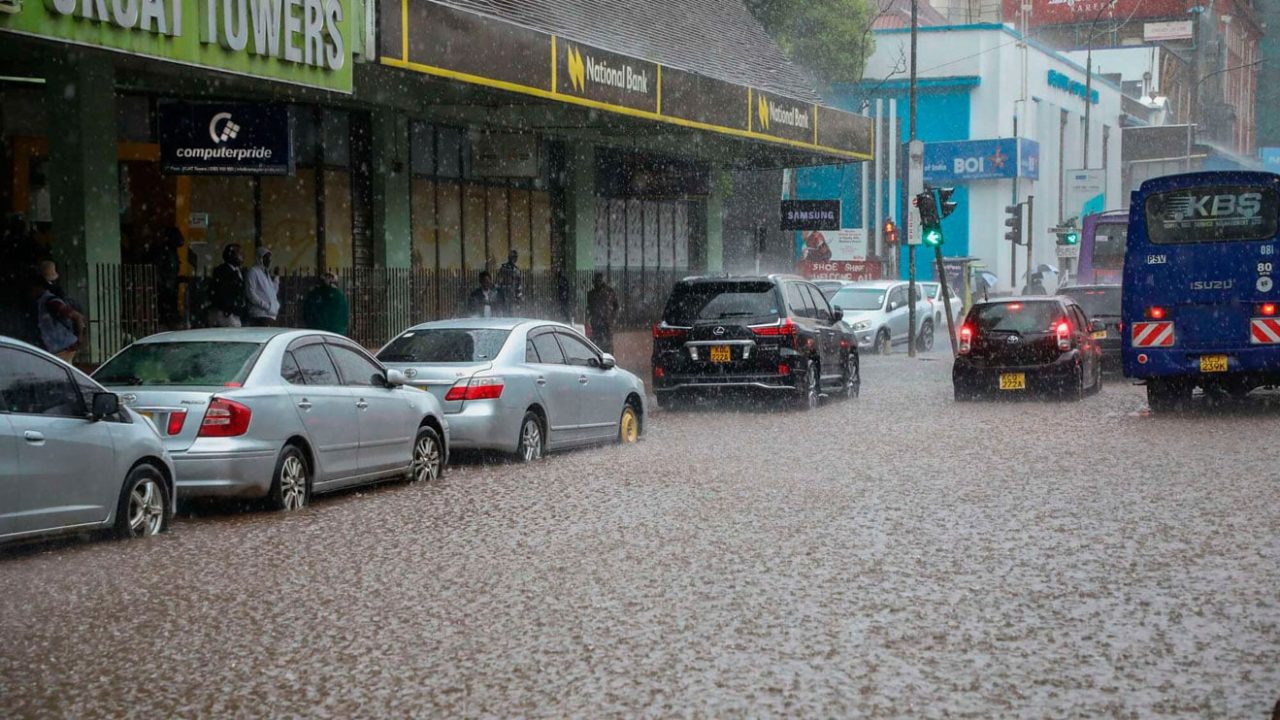
Kenya Met has warned of heavy rainfall, strong winds and possible flash floods.
The weather agency urges residents in Nairobi and other affected areas to avoid floodwaters and prepare for gusty winds.
A Kenya Met warning has flagged moderate to heavy rainfall, gusty winds and possible flash floods across several regions. The Kenya Meteorological Department urged residents, including those in parts of Nairobi, to take precautions and monitor official updates.
The agency expects rainfall above 20 millimetres within 24 hours in the Coast, Northeastern Kenya and other areas. These include highlands west and east of the Rift Valley, the Central Highlands and sections of the Southeastern Lowlands.
Meanwhile, coastal, eastern and northern regions face southerly to southeasterly winds exceeding 25 knots, or approximately 46 kilometres per hour. The department warned that the weather could reduce visibility and increase flash flood risks.

Areas covered by the Kenya Met warning
Along the Coast, the advisory covers Kwale, Mombasa, Kilifi, Tana River and Lamu. It also names Garissa, Wajir, Mandera, Marsabit and Isiolo in northeastern and northern Kenya.
Other affected counties include Migori, Nyamira, Bungoma, Busia, Kakamega, Vihiga, West Pokot, Baringo and Elgeyo Marakwet. The list also includes Trans Nzoia, Nandi, Uasin Gishu, Nakuru, Siaya, Kisumu, Homa Bay, Kisii, Kericho and Bomet.
The warning further covers Kiambu, Embu, Murang’a, Kirinyaga, Nyandarua, Nyeri, Laikipia, Tharaka-Nithi, Meru, Narok and Kajiado. Parts of Nairobi, Taita Taveta, Kitui, Machakos and Makueni should also expect rainfall.
Floodwaters can reach areas without heavy rain
The department cautioned that flash floods could occur even where residents have not experienced intense rainfall. This is because water can flow downstream from places receiving heavy rain.
Residents near rivers and drainage channels therefore face risks from rising water levels. The agency urged people to avoid crossing flooded roads, rivers and streams, and stay away from rising waters.
Motorists should also exercise caution because heavy rain and reduced visibility could make driving hazardous. Low-lying areas and settlements near waterways face particular danger from sudden flooding.
Lightning and wind precautions
During thunderstorms, residents should seek shelter in safe buildings rather than under trees. The department also advised people to avoid staying near grilled windows to reduce lightning exposure.
In addition, residents should secure loose objects and take care in exposed areas during strong winds. Gusty conditions could disrupt outdoor activities, while rapidly changing weather makes continued attention to official updates important.