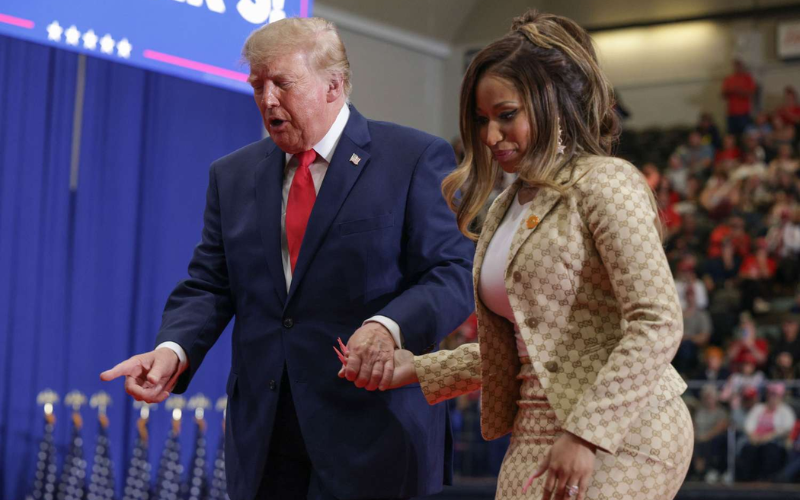
Nicki Minaj backed Donald Trump and Republican candidates at a Michigan rally.
Donald Trump’s remarks about Nicki Minaj’s figure drew online criticism as the rapper backed Republicans at a Michigan rally.
US President Donald Trump’s Minaj body comments drew online criticism after he praised the rapper’s figure at a Michigan rally. Nicki Minaj later joined him on stage to support Republican candidates ahead of the midterm elections.
Addressing supporters, Trump used a crude term to describe Minaj’s backside before asking her to stand. He then expressed hope that she had not taken offence and praised her support for him.
The Trinidadian-born rapper, known for songs including Super Bass, arrived in Michigan aboard Air Force One ahead of the event.

Minaj body comments prompt online criticism
Social media users questioned whether a president should make remarks about a woman’s body during a political address. Some criticised the comments as inappropriate, while others described them as objectifying women.
On Instagram, a user identified as Donna sarcastically questioned the president’s standards of conduct. Another user, Shekhar, expressed disbelief that a national leader would openly objectify women in a speech.
Trump’s remarks focused attention on his treatment of Minaj even as the rally sought support for Republican candidates.
Minaj backs Trump as Michigan candidates seek votes
Meanwhile, Minaj praised Trump’s leadership when she joined him on stage, wearing a gold Gucci suit. She said he had changed the country’s energy and offered Americans a hopeful future.
The rapper also led chants supporting Trump and Republican candidates. Although she has publicly backed the president, she has previously disagreed with some of his policies.
The rally came amid a closely contested Michigan Senate race between Republican Mike Rogers and Democrat Abdul El-Sayed. Both parties are seeking to mobilise voters ahead of the midterm elections.
Trump has also targeted El-Sayed’s Muslim background, making claims about his positions on extremism and immigration. In response, El-Sayed has characterised those attacks as Islamophobic attempts to divert attention from policy issues.