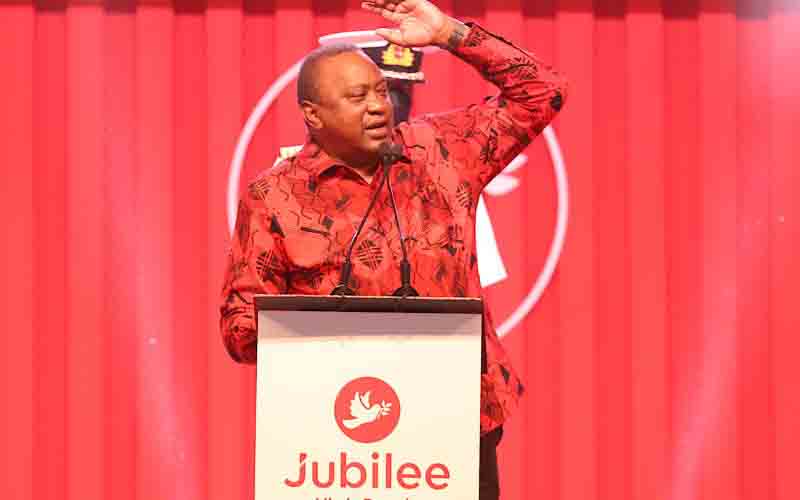


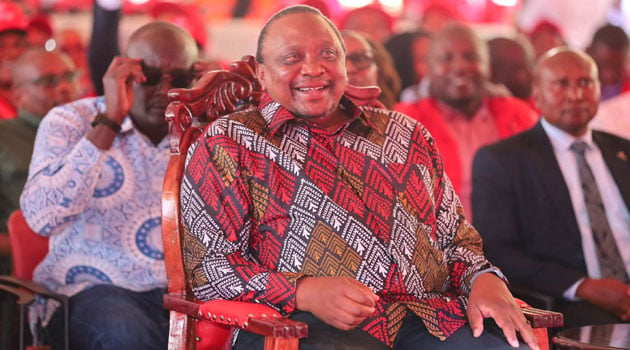
Former President Uhuru Kenyatta has welcomed a High Court ruling barring retired presidents from holding leadership positions in political parties.
The ruling was delivered on Monday, September 14, 2026, by High Court Judge Lawrence Mugambi.
Kenyatta responded to the judgment on Tuesday through his Director of Communications, Kanze Dena-Mararo.
He described the decision as an important step in strengthening Kenya’s constitutional order and democratic transitions.
According to Kenyatta, the ruling provides clarity on how political parties should handle leadership changes involving former heads of state.
Uhuru Kenyatta Ready to Leave Jubilee Leadership
The decision could bring an end to Kenyatta’s tenure as Jubilee Party leader.
Jubilee was the political vehicle that helped Kenyatta secure his second presidential term in 2017.
The former president said he is ready to facilitate a leadership transition within the party.
He also explained that previous delays were linked to internal disputes and legal battles surrounding Jubilee.
Kenyatta rejected suggestions that he had deliberately resisted leaving the party leadership.
Instead, he maintained that political leadership should go beyond official titles.
“True leadership is defined by public trust, service, and shared values,” Kenyatta said.
He also stressed that the ruling does not prevent him from expressing political views.
The former president remains free to associate with political parties and participate in civic life as an ordinary citizen.
What the High Court Ruling Means
The case centred on Section 6 of the Presidential Retirement Benefits Act.
The law requires a retired president to relinquish leadership of a political party within six months of leaving office.
The provision also links compliance to access to certain retirement benefits and state privileges.
Justice Mugambi upheld the restriction after dismissing a petition challenging the law.
The court found that the restriction was a reasonable constitutional limitation.
The judge said the provision helps prevent retired presidents from using political parties to maintain indirect political influence while receiving state-funded retirement benefits.
However, the ruling does not prevent former presidents from belonging to political parties.
They can still maintain ordinary party membership.
What the Ruling Means for Jubilee
Kenyatta’s acceptance of the judgment could now accelerate leadership changes within Jubilee.
It could also ease some of the party’s long-running internal disputes.
More importantly, the decision could set a new precedent for retired presidents who remain active in Kenyan politics.
For Kenyatta, the next chapter may now focus less on formal party positions and more on his influence as a former president and senior political figure.
The ruling therefore marks a significant moment in Kenya’s evolving political system, where former leaders must balance continued civic participation with constitutional and legal limits.